Duluth, MN
Yard Waste Removal in Duluth
Brush, storm blowdown, spring cleanup and buckthorn removal, hauled separately and disposed of the way Minnesota and Wisconsin law actually require. Flat-rate dumpsters, West Duluth based, serving Duluth and the whole Twin Ports region since 2013.
- Same dayDelivery available
- Flat rateQuoted up front
- Since 2013Locally owned
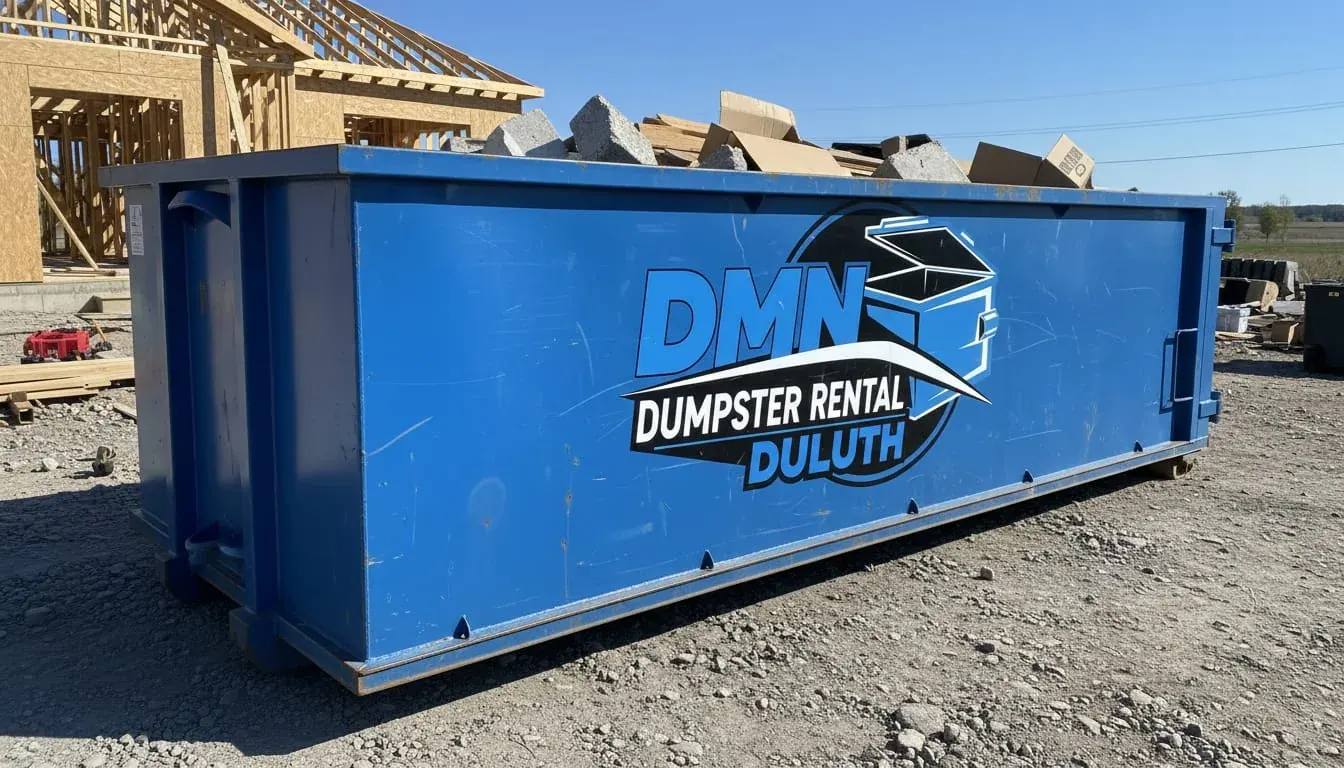
If you've ever tossed a few branches on top of a construction dumpster and figured nobody would notice, here's the problem: it's not up to us, and it's not up to you either. Minnesota has banned yard waste from landfills since the early 1990s, and Wisconsin runs the same rule on its side of the bridge. That means leaves, grass clippings, brush and garden debris legally cannot ride along in a mixed debris load bound for the landfill — they have to be kept separate and taken to a compost facility instead.
For a company that's been pulling dumpsters around Duluth's hills since 2013, this isn't a footnote, it's how the job gets planned from the start. We run dedicated yard waste loads for spring cleanup, storm blowdown, buckthorn clearing and routine brush hauling across Duluth, Superior, Hermantown, Proctor, Cloquet and the rest of the Twin Ports, and we keep those loads clean so they actually get accepted where they're supposed to go. Below is how the rules work, what does and doesn't count as yard waste, and how to size the job right.
What we handle on yard waste removal jobs
- Spring dead-fall and storm blowdown cleanup across Duluth and the Twin Ports
- Brush, branches and limbs hauled loose in an open-top dumpster
- Buckthorn and invasive species clearing, kept separate from construction debris
- Leaves, grass clippings and garden debris removal for larger properties
- Fall cleanup ahead of WLSSD's seasonal compost site closure
- Separate yard waste loads for jobs that also generate construction debris
- Coordination with sod, dirt and stump removal when a job needs both
- Flat-rate pricing sized to volume, not the weight games a landfill load runs on
The Law: Why Yard Waste Can't Ride in a Regular Dumpster
Under Minnesota Statutes § 115A.931, yard waste is prohibited from mixed municipal solid waste and from disposal facilities — in plain terms, it cannot be landfilled or trucked out with your regular trash and demolition debris. The ban has been in effect statewide since the early 1990s, and it's enforced at the transfer station and landfill scale level, not just on paper. A hauler who shows up with a load that's visibly full of brush and leaves mixed into construction debris can get that load rejected or surcharged, and that cost doesn't need to land on you.
Wisconsin runs the same policy under Wis. Stat. § 287.07, which places yard waste — grass clippings, leaves, garden debris and brush under six inches in diameter — on the list of materials barred from landfill disposal. That matters directly for jobs in Superior, Oliver and Poplar, where we're crossing into Wisconsin's system and its own compost and licensed wood-burning outlets. The short version on both sides of the bridge: yard waste gets its own load, every time.
What Actually Counts as Yard Waste
Yard waste means leaves, grass clippings, garden debris and brush and branches. It does not mean everything that comes out of a yard. Two categories trip people up constantly:
| Material | Is it yard waste? | Where it goes |
|---|---|---|
| Leaves, grass clippings, garden debris | Yes | Compost site, separate load |
| Brush and branches | Yes | Compost site, separate load |
| Sod and dirt | No — heavy fill material | Handled as fill/soil, priced by weight |
| Tree stumps & large-diameter logs | Usually handled separately | Often a specialty pull, arranged ahead of time |
| Painted or treated lumber, fencing | No — construction debris | A demolition debris or general dumpster load |
Sod and dirt are the classic mistake. They look like a yard job, but they're dense fill material, not organic waste, and they get weighed and priced completely differently than a load of brush — see our concrete and heavy debris page if you're pulling dirt, sod, or a mix of both off a landscaping job. Stumps and logs over roughly four feet or of larger diameter typically need to be handled as their own pull rather than dropped in with routine brush — call us at (218) 514-6269 before the job and we'll tell you straight whether it fits in a standard yard waste load or needs to be arranged separately.
Where It Goes: WLSSD and Duluth's Yard Waste System
The Western Lake Superior Sanitary District runs the regional yard waste compost site at 2626 Courtland Street in Duluth. It operates seasonally — roughly from mid-to-late April through the Saturday before Thanksgiving — and takes grass clippings, leaves and garden debris, plus brush, logs, dirt and sod under separate fee categories. Hours and current fees shift by season, so rather than us printing a number here that could be out of date by the time you read it, check wlssd.com directly before you haul, or let us handle the drop-off as part of the job.
Duluth doesn't run a citywide curbside brush-and-leaf pickup the way some Twin Cities suburbs do — if you want yard waste gone, it's either self-hauled to WLSSD or picked up by a hauler like us. That's exactly the gap a yard waste dumpster fills: you fill it once at your own pace, we take it to the right place, and you never have to make three trips in a pickup truck to the compost site during its posted hours. For general questions on what can and can't go into any of our dumpsters, see our what can go in a dumpster in Minnesota guide, or our dedicated WLSSD recycling guide.
Spring Cleanup and Storm Blowdown: Duluth's Two Real Seasons
Up here the yard waste season isn't long and it isn't gentle. Spring cleanup hits hard once the snowbanks finally clear off Skyline Parkway and the West Duluth hillsides — a full winter's worth of dead-fall, broken branches and matted leaves shows up all at once, and everyone in the Twin Ports is trying to get rid of it in the same six-week window. Fall is the second crunch, before the compost site closes for the season and before the next round of snow buries whatever's left in the yard.
Then there's wind. Duluth sits right off Lake Superior, and gusts that come screaming up the hillside or off the harbor take down mature birch, spruce and white pine on a fairly regular basis — it's not a once-a-decade event here, it's closer to once or twice a season somewhere in the city or out toward Two Harbors and Proctor. When a storm drops a canopy's worth of limbs across a yard or driveway, a dumpster on site beats hauling truckload after truckload, and we run same-day service when the job calls for it — see our same-day dumpster rental page for how that works.
Buckthorn and Invasive Species Removal
Buckthorn clearing has become a real, recurring job across the Duluth area, not a niche request. It's listed by the Minnesota DNR as an invasive species, it crowds out native understory, and once a homeowner or property manager decides to clear a stand of it, the volume adds up fast — buckthorn grows thick and multi-stemmed, so a modest patch of woods can fill a dumpster on its own. The disposal care that matters here is keeping the cut material contained and out of casual yard-waste piles where berries and seed can spread before it's hauled — treat a buckthorn pull like any other yard waste load: separate from construction debris, and off the property promptly rather than staged for weeks.
Hauling vs. Chipping, and Why Yard Waste Is Priced Differently
Brush is bulky but light. A dumpster full of branches might weigh a fraction of what the same size box weighs full of shingles or concrete, which is why yard waste jobs get sized and priced on volume rather than weight. That's also why chipping is worth considering for big brush piles — a chipper collapses volume dramatically, and for some storm cleanup jobs a rented or contracted chipper paired with a smaller dumpster for the chips and remaining debris costs less than hauling loose branches at full volume. For routine brush and cleanup work, though, loose hauling in an open dumpster is usually simpler and faster, and it's what most residential jobs call for.
Because yard waste has to go to a compost facility rather than the landfill, and because it's billed and handled differently on the receiving end, a dedicated yard waste load is priced separately from a mixed construction or junk load — see our residential dumpster rental page for how that compares to a general household or renovation dumpster.
Right-sized
Which dumpster for yard waste removal in Duluth?
We would rather talk you down a size than sell you air. These are the boxes that suit this work.
10 Yard Dumpster Dumpster
Right for a modest brush pile, a single storm-downed tree, or routine yard cleanup on a typical city lot.
Size details 15Cubic yards15 Yard Dumpster Dumpster
Our most common call for spring cleanup and mid-size buckthorn or brush clearing jobs.
Size details 20Cubic yards20 Yard Dumpster Dumpster
Sized for storm blowdown across a larger yard, a full property buckthorn removal, or a fall cleanup with multiple trees involved.
Size detailsLocal knowledge
Yard Waste Removal across Duluth and St. Louis County
We're based at 5713 Roosevelt St in West Duluth, and yard waste calls come from every corner of the service area — the hillside neighborhoods prone to storm blowdown, out toward Hermantown and Proctor, down the corridor through Cloquet and Carlton, and across the harbor into Superior, Oliver and Poplar on the Wisconsin side, where the landfill ban runs under a different statute but the same basic rule applies.
Whichever side of the bridge the job is on, the material has to be kept separate from construction and household debris, and it has to end up at a facility set up to take it — not a general landfill. For the Minnesota statute itself, see revisor.mn.gov; for Wisconsin's list of banned landfill materials, see the Wisconsin DNR; and for the compost site itself, current hours and drop-off rules, go straight to wlssd.com. If you're not sure which category your job falls into, our FAQ page and our contact page are both a call or a click away, or just dial (218) 514-6269 directly and we'll walk through what's on your property before we ever load a truck.
Towns we cover
We run yard waste removal out of our Roosevelt Street yard across Duluth and the surrounding suburbs.
FAQs
Yard Waste Removal questions, answered
Can I mix yard waste with regular junk or construction debris in the same dumpster?
No. Both Minnesota (Minn. Stat. § 115A.931) and Wisconsin (Wis. Stat. § 287.07) prohibit landfilling yard waste, so it has to be kept in a separate load bound for a compost facility rather than mixed into a general debris dumpster.
Does sod or dirt count as yard waste?
No. Sod and dirt are fill material, not yard waste, and they're heavy enough that they're priced and handled differently. If your job involves both brush and sod or dirt, tell us up front so we can plan two loads or the right size box.
What about tree stumps and large logs?
Stumps and larger-diameter logs usually need to be handled as their own pull rather than tossed in with routine brush. Call ahead so we can size the job correctly instead of guessing on site.
Where does the yard waste actually go once it leaves my property?
It goes to a compost facility, primarily WLSSD's yard waste compost site in Duluth, rather than to a landfill. Current hours and fees are seasonal, so check wlssd.com directly if you're planning a self-haul.
Does the City of Duluth pick up brush or leaves curbside?
Duluth does not run a standing citywide curbside brush-and-leaf collection program. Yard waste has to be self-hauled to the WLSSD compost site or picked up by a hauler, which is the gap a yard waste dumpster fills.
How do I know what size dumpster I need for a storm cleanup or buckthorn job?
Brush and cleanup debris are bulky but light, so volume is the limiting factor rather than weight. A single downed tree or small buckthorn patch usually fits a 10 yard box; larger storm damage or a full-property invasive species clearing often calls for 15 or 20 yards. Our what size dumpster do I need guide walks through it, or call (218) 514-6269 and we'll size it over the phone.
Ready when you are
Book yard waste removal in Duluth
Call and you will speak to someone local who knows the streets, the permit rules and which box actually fits your driveway. Flat rate quoted up front.
Keep going
Related services
Residential Dumpster Rental
Driveway containers for cleanouts, remodels and downsizing across the Twin Ports.
View serviceJunk Removal
Load it yourself and save, or let us take the heavy end.
View serviceConcrete & Heavy Debris
Dedicated heavy boxes for concrete, brick, basalt, block and fill.
View service