Do You Need a Permit for a Dumpster in Duluth? The Local Rules
A plain-language look at when Duluth requires a dumpster permit, when it doesn't, and how the rules change in nearby cities and across the Wisconsin line.
Duluth dumpster guide
Duluth and Superior sit on opposite sides of a state line with different disposal-ban lists. Here's what each state prohibits and where it actually goes.
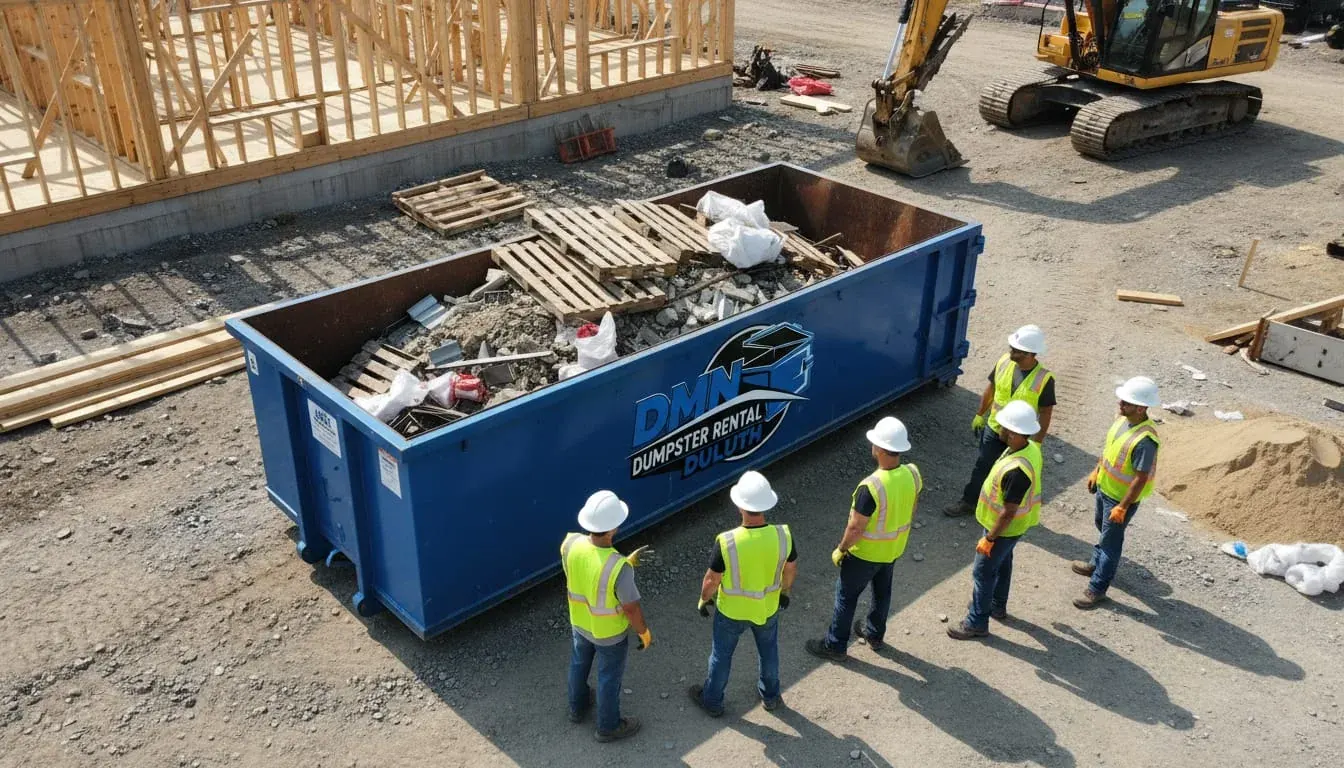
Duluth and Superior share a harbor and a highway system, but they do not share a set of disposal rules. St. Louis County sits in Minnesota; cross the Blatnik or Bong bridge into Superior, Oliver, or Poplar and you are in Wisconsin, under a different statute with a different banned-materials list. For a homeowner or contractor renting a roll-off, that distinction is not academic. A load that is fine to landfill in Hermantown can get rejected at a Wisconsin transfer station, and vice versa. This guide lays out, state by state, what can and cannot go in a dumpster around the Twin Ports, and where the banned items actually need to go.
The bulk of what fills a residential or commercial roll-off is accepted everywhere in the region, regardless of which side of the state line the job sits on:
If you're unsure whether your project is general debris or something more specialized, our construction dumpster rental and demolition debris pages break down what each size handles, or call (218) 514-6269 and describe the job.
Minnesota's waste management law, Minnesota Statutes chapter 115A, bans several specific categories from mixed municipal solid waste and land disposal facilities. The bans that matter most for a Duluth-area rental:
On the Minnesota side, the destination for nearly all of these is the same place: the Western Lake Superior Sanitary District. WLSSD operates a household hazardous waste facility and recycling drop-off for St. Louis County residents that accepts paint, batteries, automotive fluids and filters, cleaners, pesticides, and fluorescent bulbs — see our WLSSD recycling guide for a fuller walkthrough, and check WLSSD's site for current hours before you make the trip.
Wisconsin's landfill and incineration ban, Wis. Stat. § 287.07, covers much of the same ground as Minnesota's rules but is broader in one important way: it also bans ordinary recyclables from disposal, not just hazardous or bulky items. Per the Wisconsin DNR, materials banned from landfilling or incineration statewide include:
That last pair of categories is the real difference for a Twin Ports job. Minnesota's chapter 115A bans focus on appliances, electronics, batteries, oil, and hazardous materials — it does not put a blanket statutory ban on landfilling ordinary cardboard, glass jars, or plastic bottles the way Wisconsin's § 287.07 does. A mixed cleanout dumpster in Hermantown or Duluth can generally absorb some incidental cardboard and glass without issue, while the same load staged in Superior, Oliver, or Poplar technically needs those recyclable containers and paper pulled out first.
Electronics in Wisconsin fall under E-Cycle Wisconsin, a manufacturer-funded program established in 2009 that bans TVs, computer monitors, computers, printers, and similar devices from landfills and incinerators, routing them to registered collection sites at no cost to residents. For household hazardous waste, appliances, and electronics generated on the Wisconsin side, Douglas County residents should route material through the county's household hazardous waste and recycling programs rather than a roll-off — confirm current collection days and accepted items directly with the county before a Superior, Oliver, or Poplar job.
| Category | Minnesota (MN Stat. ch. 115A) | Wisconsin (Wis. Stat. § 287.07) |
|---|---|---|
| Yard waste | Banned from mixed municipal solid waste and disposal facilities | Banned from landfill and incineration |
| Major appliances | Banned; must be recycled | Banned; must be recycled |
| Electronics | Minnesota Electronics Recycling Act; CRT devices explicitly banned | E-Cycle Wisconsin; broader device list banned outright |
| Tires | Registered waste tire haulers/processors (MN Rules ch. 9220) | Banned except with energy recovery |
| Lead-acid batteries | Banned since 1988 | Banned |
| Used oil & filters | Must go to recycling or HHW facility | Banned from landfill/incineration |
| Cardboard, glass, cans, #1-#2 plastic, paper | No blanket statutory landfill ban | Explicitly banned from landfill/incineration |
| Household hazardous waste | WLSSD household hazardous waste facility | Douglas County household hazardous waste program |
A large share of Duluth-area housing predates 1980, which means pipe wrap insulation, vinyl floor tile and its mastic, textured ceiling material, and some siding and roofing products may contain asbestos. Neither Minnesota nor Wisconsin allow suspect asbestos-containing material into a general roll-off. Under the federal Asbestos NESHAP program, enforced in both states, regulated asbestos-containing material from demolition or renovation work must be identified, handled, and disposed of by a licensed asbestos abatement contractor following specific removal and notification procedures — it cannot simply be bagged and thrown in with drywall and flooring. If you're tearing out flooring, insulation, or ceiling material in a pre-1980 Duluth or Superior home and aren't certain what you're dealing with, have it tested before demolition starts. This is one area where "probably fine" is not good enough.
Homes built before 1978 may have lead-based paint, and EPA's Renovation, Repair and Painting (RRP) Rule requires contractors performing work that disturbs paint in those homes, child care facilities, and schools to be RRP-certified and follow lead-safe practices — containment, minimizing dust, and cleanup verification. This is a federal rule, so it applies across the whole Twin Ports region regardless of the state line. Painted debris itself (old trim, doors, painted drywall) can generally still go in a C&D dumpster; the RRP rule governs how the work is performed and contained, not a separate disposal ban on the debris.
Paint is one of the most common things people try to toss straight into a dumpster, and the two types are handled differently. Latex (water-based) paint that has fully dried or been solidified with cat litter or a commercial hardener is generally treated as ordinary solid waste in small quantities. Oil-based paint, stains, and thinners are classified as household hazardous waste in both states and should never go in a dumpster, wet or dry — they belong at WLSSD's facility on the Minnesota side or the Douglas County program on the Wisconsin side. When unsure, treat any paint as hazardous waste rather than guessing.
Refrigerators, freezers, window air conditioners, and dehumidifiers contain refrigerant gas that both states require to be professionally recovered before the unit is scrapped or recycled. That's part of why major appliances are banned outright from a general dumpster load: a certified technician has to evacuate the refrigerant first, then the unit goes through an appliance recycler rather than a landfill or roll-off. If your cleanout includes an old fridge or window AC unit, plan a separate appliance pickup rather than loading it with everything else.
Disposal facilities on both sides of the border screen incoming loads, and banned material spotted at the scale doesn't just get quietly set aside. A load can be rejected outright and sent back for sorting, or the facility can charge a contamination or handling fee to cover pulling the material out and routing it correctly. Larger or clearly hazardous violations can also trigger regulatory penalties under the statutes above. A few stray fluorescent bulbs or a leaking oil filter buried in a construction dumpster can turn into real delay and cost on a job that was otherwise straightforward. Keep appliances, electronics, tires, batteries, oil, lamps, and anything hazardous out of the roll-off from the start, and ask us before the job if you're not sure where a specific item falls.
Sorting out banned material is easier when the dumpster is sized correctly in the first place — an overstuffed bin invites people to cram in whatever doesn't fit anywhere else. Browse our dumpster size guide or the 20-yard dumpster page for a typical remodel, and check our Duluth permit guide if the bin needs to sit in the street or right-of-way. We deliver throughout Superior, Oliver, and Poplar on the Wisconsin side and across the St. Louis, Carlton, and Lake county service area in Minnesota, and we'll flag anything in your project that needs a separate disposal route before it becomes a scale-house problem. Call (218) 514-6269 or visit our contact page to talk through your specific job.
FAQs
Yes. Mattresses, couches, and general furniture are accepted in a standard roll-off on both sides of the state line. Neither Minnesota nor Wisconsin's disposal-ban lists cover ordinary furniture.
Yes, in both states. Minnesota bans yard waste from mixed municipal solid waste and disposal facilities under Minn. Stat. § 115A.931, and Wisconsin bans it from landfills and incinerators under Wis. Stat. § 287.07. Grass, leaves, and garden debris need a separate yard waste route in either state.
Not under Wisconsin's landfill ban list. Wis. Stat. § 287.07 explicitly bans corrugated cardboard, newspaper, office paper, and glass, aluminum, steel, and #1-#2 plastic containers from landfill or incineration disposal. Minnesota does not have the same blanket statutory ban, which is a real difference between the two sides of the Twin Ports.
Stop and have the material tested before demolition. Asbestos-containing material cannot go in a dumpster under the federal Asbestos NESHAP program; it must be handled and disposed of by a licensed abatement contractor. This is especially relevant in Duluth-area homes built before 1980.
On the Minnesota side, major appliances and electronics need refrigerant evacuation and recycling through a proper appliance or electronics recycler; WLSSD is the go-to resource for St. Louis County households. On the Wisconsin side, electronics route through E-Cycle Wisconsin's free collection sites, and appliances go through Douglas County's recycling program. Call (218) 514-6269 and we can point you to the right option for your address.
Ready when you are
Call and you will speak to someone local who knows the streets, the permit rules and which box actually fits your driveway. Flat rate quoted up front.
Keep reading
A plain-language look at when Duluth requires a dumpster permit, when it doesn't, and how the rules change in nearby cities and across the Wisconsin line.
How Duluth contractors handle C&D debris classification, plaster and lath weight traps, load legality, and spring load restrictions correctly.
A practical, room-by-room guide to clearing a parent's Duluth home: what to save before anything is thrown away, where to donate locally, and how to pace the work.