
An Estate Cleanout Checklist for Duluth Families
A practical, room-by-room guide to clearing a parent's Duluth home: what to save before anything is thrown away, where to donate locally, and how to pace the work.
Duluth dumpster guide
How Duluth contractors handle C&D debris classification, plaster and lath weight traps, load legality, and spring load restrictions correctly.

Haul enough tear-off and remodel debris out of Duluth's hillside neighborhoods and you learn the local rules fast, usually the hard way, when a load that looked fine on paper comes in 3,000 pounds over what the truck can legally carry. Construction and demolition debris is not garbage, it is not billed like garbage, and in this region it is not even landfilled at the same facility as household trash. Understanding that distinction, and the specific weight traps built into Duluth's housing stock, is what separates a job that runs on schedule from one that eats a change order on disposal alone.
Municipal solid waste (MSW) from a kitchen or a curbside can goes to a different facility, under different rules, than construction and demolition (C&D) debris. The Minnesota Pollution Control Agency regulates C&D landfills separately from MSW landfills and has been tightening those rules because unlined C&D sites have shown groundwater contamination that lined, monitored MSW facilities are built to prevent. That is why a dumpster of shingles, drywall, and dimensional lumber is priced, weighed, and routed differently than a container of household junk.
Locally, the Western Lake Superior Sanitary District (WLSSD) runs the region's Materials Recovery Center on Rice Lake Road plus a Reuse Center for salvageable building material, and its transfer and disposal infrastructure is the backstop for anything a hauler cannot bin as clean and recyclable. Know that going in and you can plan disposal cost instead of getting surprised at the tail end.
MPCA's guidance on building material recycling is blunt: keeping streams separate on-site keeps them free of contamination, more desirable as recyclables, and cuts transportation and disposal cost. Certified C&D material recovery facilities in Minnesota can pull 50 to 75 percent of a mixed load out for recycling by weight, but that sort line is not free. A load that arrives already separated skips it.
On a real Duluth job, the streams worth keeping apart are:
Mix all of that with painted lath, shingles, and insulation and the whole load gets billed and handled as mixed C&D, at mixed C&D rates, with none of the recycling credit. On a multi-container job, a dedicated concrete and heavy debris box run alongside a general C&D container for framing and drywall routinely pays for itself in disposal fees alone, before you even count the scrap metal check.
Duluth's housing inventory skews old, much of it built into the hillside between the 1890s and 1930s, which is what makes debris weight estimation here harder than it looks. Every weight-based rental agreement has an included tonnage allowance, and the materials below blow past it fastest.
If there is a single material that catches contractors off guard on Duluth remodels, it is plaster and lath. Original interior walls in the pre-1940 hillside housing stock are a sandwich of gypsum or lime plaster, keyed over wood lath strips, and it is dense in a way drywall is not. A pickup-bed pile of torn-out plaster and lath weighs meaningfully more than the same volume of demoed drywall, and a room-by-room gut job in one of these houses can fill a container's weight allowance well before it fills the box visually. Bid it and size the container assuming plaster and lath, not drywall.
Old-growth dimensional lumber pulled from pre-war framing is denser and heavier per board foot than today's fast-growth lumber. Brick, common in Duluth's older commercial buildings and chimneys, is heavy and unforgiving in a mixed load. Foundation and retaining-wall work around the hillside neighborhoods regularly turns up local bluestone and basalt that early builders quarried and set by hand — dense enough that a modest pile of broken foundation stone can weigh out a container long before it looks full.
| Material | Approximate weight | Where it shows up in Duluth |
|---|---|---|
| Plaster and lath | Heavier than drywall by volume | Pre-1940 hillside interior demo |
| Old-growth dimensional lumber | Denser than modern framing lumber | Pre-war framing and remodels |
| Brick | ~4,000+ lb per pallet-size stack | Chimneys, older commercial buildings |
| Bluestone / basalt | Among the heaviest common C&D material | Older foundations, retaining walls |
| Asphalt shingles | ~200–300 lb per square, more layered | Steep hillside roof tear-offs |
Layered shingle roofs are common on older Duluth homes too, and each added layer means real tonnage. Plan roof tear-off containers separately using our roofing tear-off dumpster guide rather than folding the job into a general demo estimate.
The biggest mistake we see on active jobs is renting one oversized container up front to cover the whole project. Debris volume and weight change character by phase, and swap-outs almost always beat a single mega-box:
A container scheduled around the whole project instead of the current phase just racks up standby time for no reason. See our dumpster sizing guide for phase-by-phase sizing, and use construction dumpster rental built around swap-outs to keep a live job moving.
Framing, rough-in, and final inspections all create windows where debris needs to be cleared so the inspector can see what they need to see, and a full container in the wrong spot on inspection day is an avoidable delay. Coordinate delivery and swap timing against the inspection schedule, not just disposal need.
Site access compounds this in Duluth. The hillside street grid has narrow, steep pitches, tight alley access, and on-street parking restrictions that limit where a roll-off truck can safely set and pull a container, and permit requirements shift depending on whether the box sits on the street or on private property — our Duluth dumpster permit guide and steep driveway placement guide cover both. Tell your hauler the grade and access before delivery day, not when the truck is already on-site.
This is the seasonal wrinkle that catches out-of-town GCs and even some local ones. Every spring, as frost leaves the ground, St. Louis County and MnDOT post seasonal weight restrictions on designated roads across northeastern Minnesota, typically somewhere in the March-through-May window depending on the thaw that year. Posted gravel roads are commonly capped around 5 tons per axle and paved roads around 10 tons per axle unless signed otherwise — both well under a loaded roll-off truck's normal legal weight. Dates and road segments are set annually and vary by zone, so confirm current status with MnDOT's seasonal load limit page or St. Louis County before scheduling a heavy tear-off in that window.
In practice: a fully loaded 30-yard box of concrete or brick that is legal to haul in July can be over the posted limit on a restricted road in April. Heavy demo and concrete-removal jobs scheduled in early spring need extra lead time, more frequent swap-outs at lighter partial loads, or routing that avoids restricted segments. Plan around it rather than finding out from a citation.
Independent of season, every load needs to leave legal:
Any renovation touching material installed before 1980 needs a lead and asbestos check before demo starts, not after. Plaster, floor tile mastic, pipe insulation, and old vermiculite are common asbestos-containing materials in Duluth's older housing stock, and lead paint is close to a given on pre-1978 surfaces. A hauler cannot legally accept confirmed asbestos-containing material in a standard roll-off, and finding it mid-demo halts the swap schedule until testing and abatement clear it. Build that window into the front of the schedule, not as a reaction.
Ductwork, wiring, old plumbing, appliances, and structural steel have scrap value that disappears once mixed into a general debris load. Set aside a scrap pile on any demo job with real metal content and that material becomes revenue instead of tonnage you pay to dispose of.
A five-minute conversation before delivery avoids most problems above. Give your hauler:
That lets a hauler size and schedule the right container instead of guessing, and it is the difference between predictable cost and a change order nobody wanted. Call (218) 514-6269 before the demo crew shows up and we will size the job right the first time.
We have hauled C&D debris out of Duluth's hillside neighborhoods, West Duluth, and the Twin Ports since 2013, and we size jobs around this region's specific weight traps, not a generic national chart. Whether the job is a full demolition debris haul, a roofing tear-off, or a phased commercial build-out, we serve Duluth, Superior, Hermantown, Proctor, Cloquet, and Two Harbors. For a quote sized to your project phase, call (218) 514-6269 or check dumpster sizes.
FAQs
It is priced and handled differently rather than simply "more." Construction and demolition debris goes through separate facilities and pricing than household trash, and how you separate a load (clean wood, concrete, metal versus mixed debris) has a bigger effect on final cost than the raw volume does. Mixed loads with plaster, shingles, and framing lumber together typically cost more per ton than clean, source-separated material.
Yes, plaster and lath goes in a standard construction dumpster, but it needs to be planned for by weight, not volume. Because it is denser than drywall, a room's worth of plaster and lath demo can hit a container's included tonnage allowance well before the box looks full. Tell your hauler the building is pre-1940 with plaster walls so they size the container correctly.
Spring load restrictions are seasonal weight limits that St. Louis County and MnDOT post on certain roads each spring while frost is leaving the ground, typically sometime in the March-through-May window with dates set annually. They can cap posted gravel roads around 5 tons per axle and paved roads around 10 tons per axle, which is below a fully loaded roll-off truck's normal weight. Heavy demo jobs, especially concrete and brick removal, scheduled in early spring should confirm current restrictions with MnDOT or the county and plan swap-out timing accordingly.
If the building was constructed or last renovated before 1980, yes. Plaster, old floor tile mastic, pipe wrap, and vermiculite insulation are common asbestos-containing materials in Duluth's older housing stock, and confirmed asbestos material cannot go into a standard roll-off container. Testing before demo starts prevents a mid-project shutdown while abatement gets scheduled.
Fill it level with the top rail rather than mounding material above it, tarp the load before it moves, and keep banned items like liquids and hazardous waste out entirely. If a load is unusually dense, such as one mostly full of stone, brick, or concrete, flag it for the hauler so it can be weight-checked before leaving the site rather than discovered as a problem on the road.
Ready when you are
Call and you will speak to someone local who knows the streets, the permit rules and which box actually fits your driveway. Flat rate quoted up front.
Keep reading
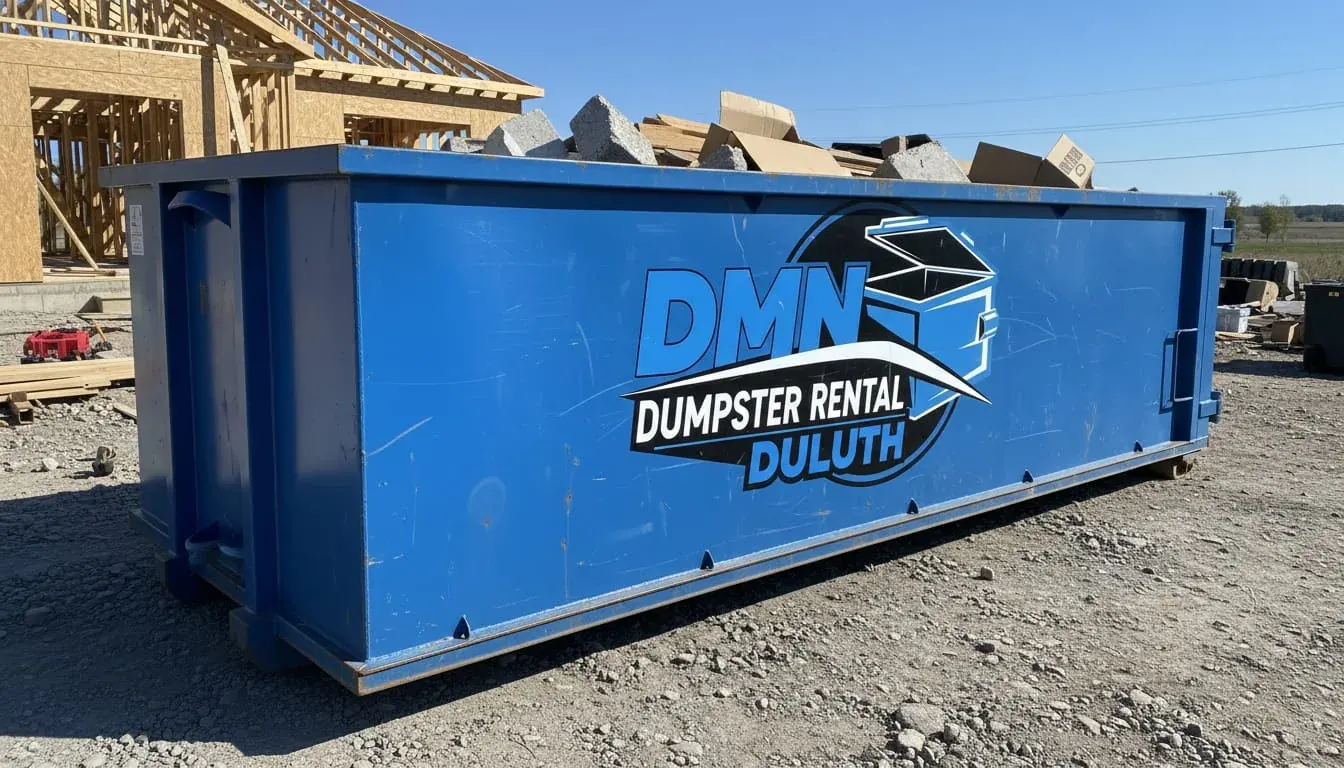
A practical, room-by-room guide to clearing a parent's Duluth home: what to save before anything is thrown away, where to donate locally, and how to pace the work.
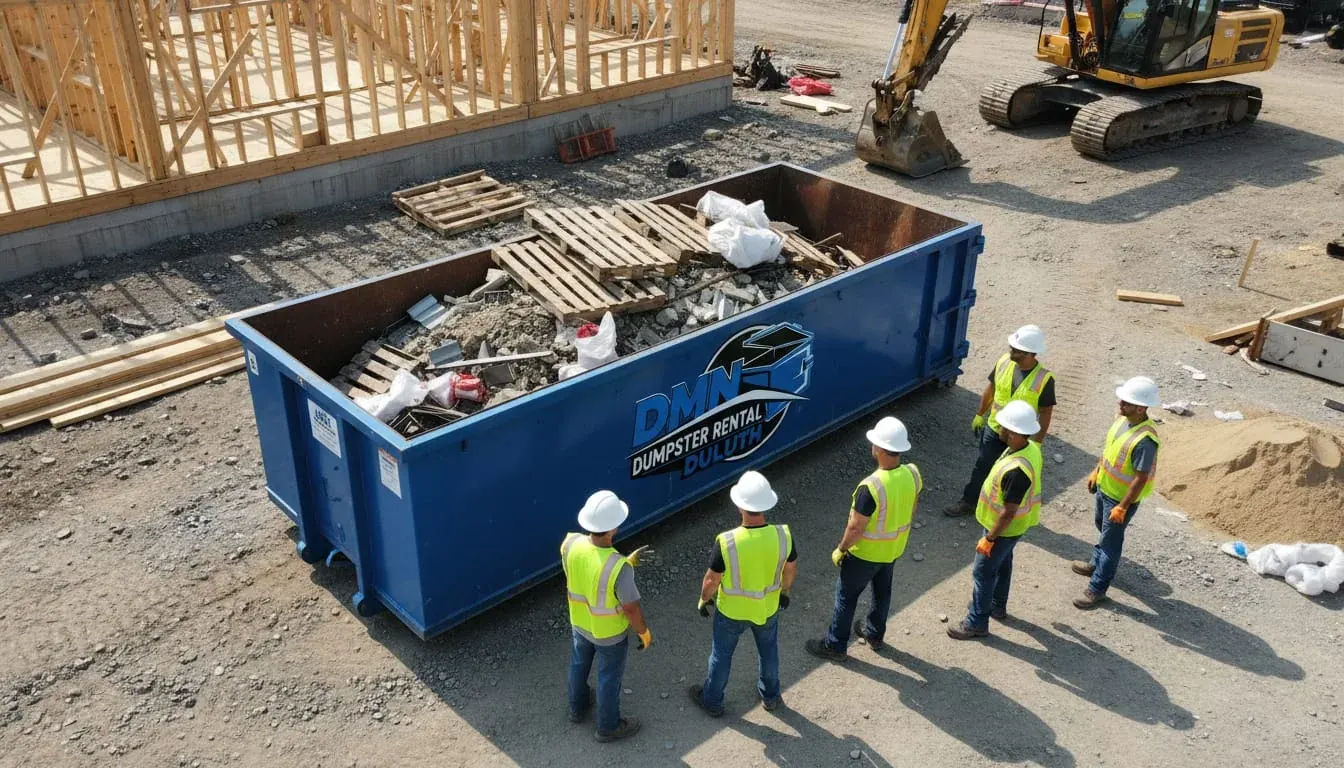
Squares, shingle weight per layer, ice dams, snow load, hillside placement, winter tear-offs, and permits — how we size a Duluth re-roof dumpster.
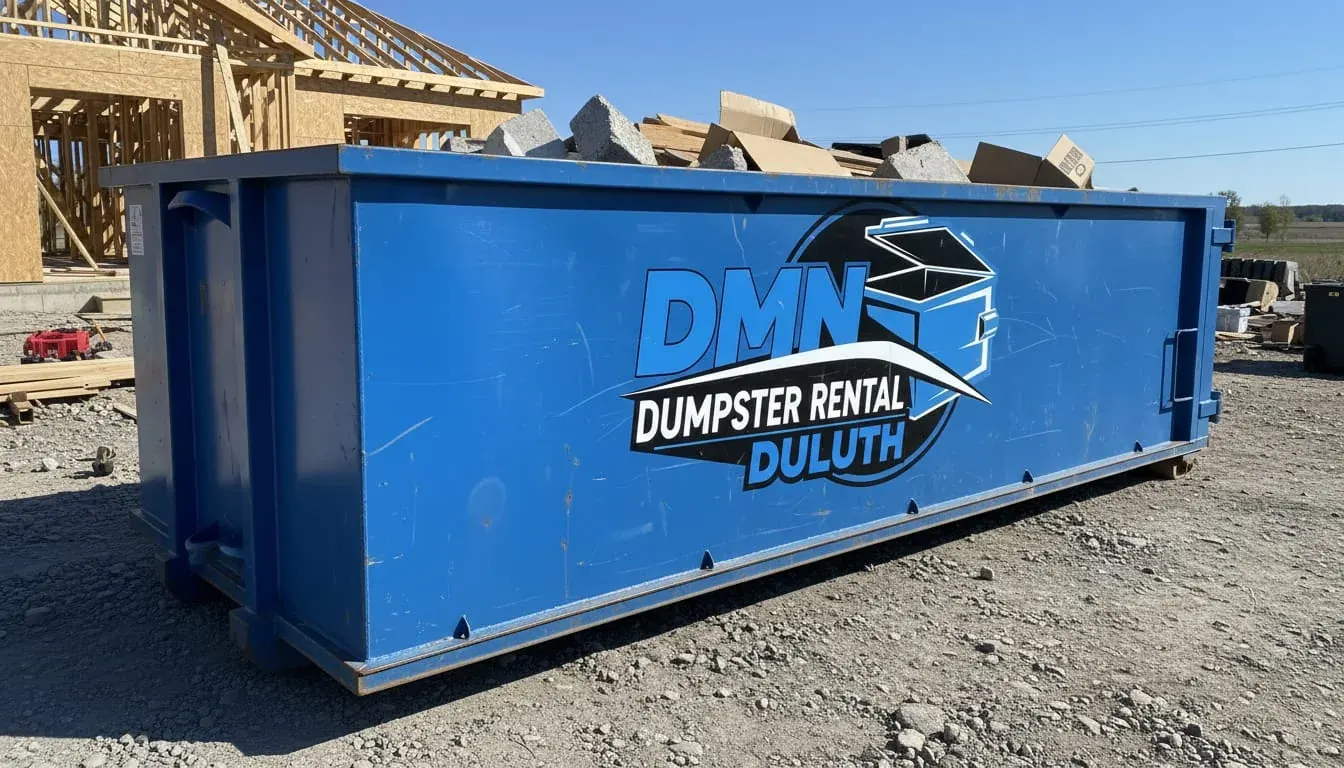
An operator's guide to frozen ground, spring load restrictions, snow weight, hillside placement, and ice dam season for Duluth dumpster rentals.