
40 Cubic Yards
40 Yard Dumpster Rental in Duluth, MN
Our largest box — right for commercial fit-outs, teardowns and roofing at scale where the debris is high-volume but light. Almost never the right call for concrete, dirt or shingles alone. Read on before you book the biggest size.
- 40 ydCapacity
- 12 pickup-truck loadsPickup loads
- 5–6 tonsWeight allowance
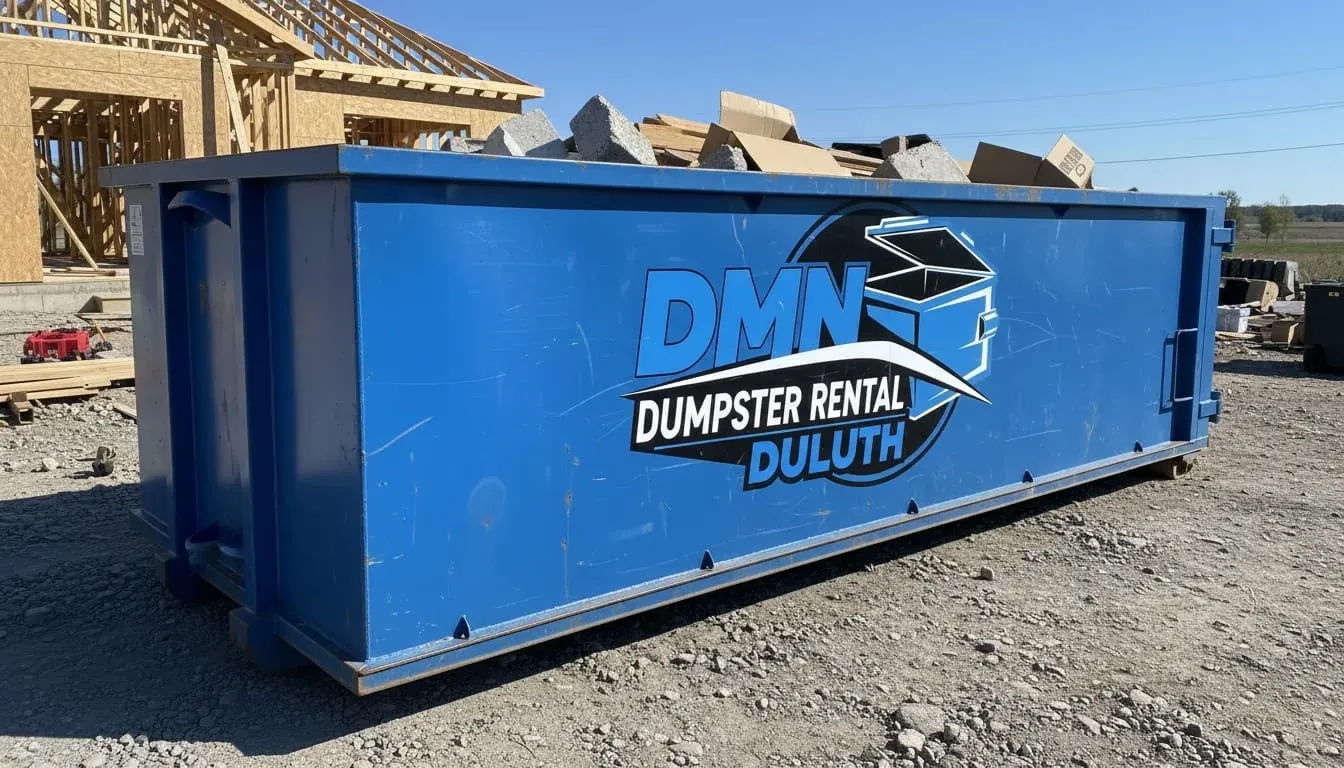
The 40 yard is 22 feet long, 8 feet wide and 8 feet tall — the same footprint as the 30 yard but two feet taller, holding roughly 12 pickup loads on a 5-6 ton weight allowance. That is a lot of volume for a moderate weight jump, and that ratio is the whole story of when this size is right: it is built for high-volume, comparatively light debris, not for dense material.
Commercial tenant fit-outs, a full building teardown generating mostly light framing and finish debris, or roofing at a scale beyond what a 20 yard can hold are the classic 40 yard jobs. What it is almost never right for is a load of concrete, dirt, brick or shingles on their own — that dense material will hit the weight allowance while the box still looks mostly empty, and you will have paid for volume you never used. The 8-foot wall also makes hand-loading genuinely difficult, which the loading section below covers honestly.
What fits in a 40 yard dumpster
- Commercial tenant fit-out or strip-out debris
- Large residential or outbuilding teardown (light framing)
- Commercial-scale roofing (large building, multiple layers)
- High-volume packaging and foam from a buildout
- Office or retail interior demolition
- Bulky light decluttering (furniture, fixtures, cardboard)
- Framing lumber from a major addition or remodel
- Overflow light-debris box on a multi-dumpster job
Dimensions, footprint and overhead clearance
At 22 x 8 x 8 ft, the 40 yard needs the same ground footprint as a 30 — about 24-25 feet of pad length and a straight 60-70 foot truck approach — but the extra height changes two things: the site needs to be genuinely level, since an 8-foot wall amplifies any lean from a sloped pad, and you need to check overhead clearance for power lines and low tree branches along the entire delivery route, not just at the placement spot itself. A loaded roll-off truck carrying a 40 yard rides taller than any other size we run, and the last thing anyone wants is a call from the driver halfway up the driveway about a line he cannot clear.
| Spec | 30 yard | 40 yard |
|---|---|---|
| Dimensions | 22 x 8 x 6 ft | 22 x 8 x 8 ft |
| Weight allowance | 4-5 ton | 5-6 ton |
| Holds about | 9 pickup loads | 12 pickup loads |
See how it compares against the rest of the lineup on the sizes page, or call (218) 514-6269 before booking a 40 — it is the one size where a quick conversation about what's actually in the load saves real money.
What the 40 yard is actually for
Commercial fit-out and strip-out debris is the clearest fit — old flooring, drop ceiling, drywall, fixtures and framing scrap from an office or retail buildout, which is bulky in volume but light per cubic foot. A full building teardown generating mostly wood framing rather than masonry is another good match, and roofing at commercial scale, across a building far larger than a residential 20-30 square job, is the third. All three share the same profile the 40 yard rewards: lots of cubic footage, comparatively low density.
Our commercial dumpster rental and roll-off dumpster rental services both run the 40 yard for jobs at this scale, and roofing dumpster rental covers it for large commercial roofs specifically.
Why it's almost never right for heavy debris
This is the honest warning most companies skip. A 5-6 ton allowance sounds generous, but concrete, brick, dirt or a heavy roofing tear-off will hit that ceiling with the box still visibly far from full — you end up paying for 40 yards of steel and using maybe a third of it. We would rather point a caller with a heavy-material job toward a 10 yard for dense debris or a 30 yard for mixed demolition than sell a 40 yard that will overweight on the first few loads.
If you are not sure whether your material is "light" or "heavy" in this sense, call (218) 514-6269 and describe it. Our concrete and heavy debris service exists specifically because this mismatch is one of the most common sizing mistakes we see.
Loading an 8-foot wall
Eight feet is taller than most people can comfortably lift over, which means hand-loading a 40 yard by wheelbarrow the way you would a 10 or 15 yard is genuinely hard past the first couple of feet of fill height. Plan on a loading ramp, a conveyor, or a skid steer for anything beyond a light debris stream carried and tossed by hand, and budget crew time accordingly — a 40 yard job without a loading plan takes far longer than the same volume in a shorter box, and a crew that shows up expecting to toss everything by hand will find out the hard way about an hour in.
Stage material near the box rather than making long carries, and load light bulky items (drywall sheets, broken-down cabinetry, foam packaging) loosely stacked rather than compacted, since compacting light debris by hand at that wall height is slow and not worth the effort on a box this size. Crews running a machine instead of hand-loading tend to finish a 40 yard job in a fraction of the time.
Where it sits in Duluth — and when you need a street permit
Newer, level commercial and residential lots in Hermantown and Rice Lake are the easiest placements for a 40 yard — wide, flat, and built for this kind of vehicle access in a way older Duluth lots often are not. Tight urban sites, downtown storefronts, or jobs without off-street parking sometimes require placing the box in the public street or right-of-way instead, and the City of Duluth requires an obstruction permit for that — budget a modest fee, a surety bond, and a few business days' lead time. Our permit guide walks through the process in plain terms, and we can confirm whether your specific site needs one before you book.
One winter-specific note: a 40 yard left uncovered through a heavy Duluth snowfall picks up real added weight from accumulated snow sitting on top of light debris, occasionally enough to matter for a load already running toward the tonnage limit. Tarp it or schedule the pull before a big system rolls through — our winter rental guide covers this and a few other cold-weather details worth knowing before a January or February delivery.
Local fit
The 40 yard in Duluth driveways
The newer, level lots in Hermantown and Rice Lake are the easiest 40 yard placements we do — wide driveways and commercial pads with room to spare, none of the grade or access issues that rule out a box this size on parts of the Hillside or in Central Duluth. If your job is downtown or on a tight urban lot with no off-street parking, the box may need to sit in the public right-of-way instead, which requires an obstruction permit from the City of Duluth; the process and fee schedule are on duluthmn.gov, and we can walk you through what it needs before delivery.
Winter changes the math on an open 40 yard more than people expect. Lake-effect snow off Lake Superior can dump a foot or more in a single system, and that snow sitting on an uncovered load of light debris adds real, measurable weight — enough on occasion to push a load that was comfortably under the 5-6 ton allowance closer to it. Covering the box or scheduling the pull ahead of a forecasted storm avoids the surprise. Current statewide guidance on large-scale construction and demolition debris is published by the Minnesota Pollution Control Agency.
Not sure?
Compare the other sizes
Sizing up costs you money you did not need to spend. Sizing down costs you a second haul. Here is the rest of the range.
10 Yard Dumpster
Small bathroom gut, single-room cleanout, concrete and dirt, garage purge
View 10 yard 15Cubic yards15 Yard Dumpster
Kitchen remodel, basement cleanout, small roof tear-off, deck removal
View 15 yard 20Cubic yards20 Yard Dumpster
Whole-house cleanout, larger remodel, 20–30 square roof, flooring
View 20 yard 30Cubic yards30 Yard Dumpster
Major renovation, new-build construction, estate cleanout, demolition
View 30 yardFAQs
40 Yard dumpster questions
Can I put concrete or dirt in a 40 yard dumpster?
You can, but you almost never should. Concrete and dirt are dense enough that a 40 yard will hit its 5-6 ton weight limit with the box still mostly empty, meaning you pay for volume you never use. A 10 or 15 yard is the better and cheaper fit for that material — call and we will steer you to the right size.
Do I need a City of Duluth permit for a 40 yard placed in the street?
Yes. Placing any roll-off container in the public street or right-of-way requires an obstruction permit from the City of Duluth's engineering division, including a fee and a surety bond. If your lot has off-street parking that fits the box, no permit is needed — we will tell you which applies to your site.
Will a 40 yard dumpster fit on a typical Duluth driveway?
It needs the same footprint as a 30 yard — roughly 24-25 feet of pad length and a straight 60-70 foot approach — plus a genuinely level site, since the 8-foot wall amplifies any lean. Newer, flatter lots in Hermantown and Rice Lake fit it easily; older, sloped or narrow Duluth driveways often do not.
How do you load an 8-foot wall without machinery?
Honestly, it's hard past the first few feet of fill height. Most 40 yard jobs use a ramp, conveyor or skid steer rather than hand-loading by wheelbarrow the whole way. If your crew is loading entirely by hand, a shorter box is usually faster and less punishing even if it means an extra swap-out.
Is a 40 yard good for a winter roofing tear-off?
It can be, for a large commercial roof, but check the material weight first — shingles are dense enough to overweight a 40 yard quickly, and accumulated snow on an uncovered load adds further weight through the winter. A 20 yard is usually the better fit for a residential tear-off.
What's the difference between a 30 and a 40 yard?
Two feet of extra wall height at the same 22 x 8 foot footprint, adding roughly three pickup loads and a ton of weight allowance. The 30 is built for mixed demolition and renovation debris; the 40 is built for high-volume, comparatively light material like commercial fit-out scrap.
Ready when you are
Reserve a 40 yard dumpster in Duluth
Call and you will speak to someone local who knows the streets, the permit rules and which box actually fits your driveway. Flat rate quoted up front.