
Dumpster Placement on Duluth's Steep Driveways and Hillside Streets
A West Duluth operator's guide to getting a roll-off dumpster safely onto hillside driveways, alleys, and street placements from Congdon to Denfeld.
Duluth dumpster guide
An operator's guide to frozen ground, spring load restrictions, snow weight, hillside placement, and ice dam season for Duluth dumpster rentals.
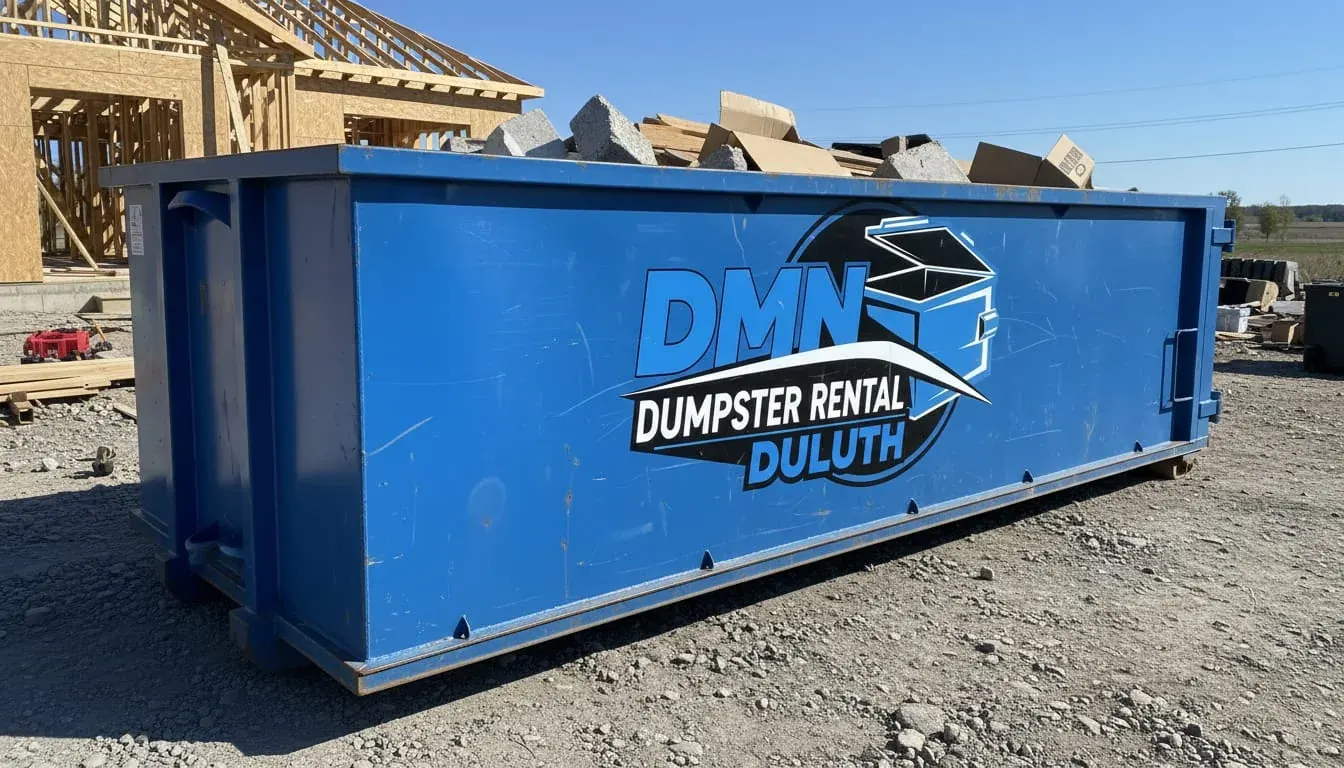
I've dropped roll-off boxes on driveways in Lakeside when it was eleven below and the truck was fogging up the whole street with exhaust. I've also had a load frozen so solid to the bottom of a 20 yard box that it took a chisel bar and twenty minutes of swearing to break it loose at the transfer station. Winter dumpster rental in Duluth isn't the same job as summer dumpster rental with a coat on — the physics change, the roads change, and the rules change. Here's what actually matters, from someone who's been doing this since 2013.
People worry about us setting a 20 yard dumpster on their frozen lawn and cracking something underneath. Don't. Solid frozen ground carries weight better than dry summer dirt. Duluth's building code requires footings to sit a minimum of 60 inches below grade specifically because the frost line here runs that deep in a normal winter — that's how hard the ground freezes. A loaded roll-off with a full box can push 20,000+ pounds through those steel rails, and in January that weight rides on ground frozen like concrete. We can set boxes on lawns, gravel, even soft spots in December through March that we'd never touch in July.
The trouble starts in spring. Late March into May, the top foot or two of ground thaws while everything underneath is still frozen solid. Water has nowhere to go, so that top layer turns to soup while the frost layer below acts like a bowl holding it in. That's exactly when a container looks the least dangerous — the snow's gone, the lawn looks normal — and it's exactly when a truck is most likely to rut a driveway or sink a wheel into what looks like solid turf. If you're planning a spring cleanout, tell us where you want the box and we'll tell you honestly whether that spot holds in April or whether we need plywood or steel track mats under the wheels first.
This is the part almost nobody explains, and it's why a dumpster company might not get you a box on the exact day you want in April. Minnesota posts seasonal load restrictions — frost laws — on roads every spring as frost leaves the ground, because a fully loaded truck can break up a roadbed that's half-thawed. MnDOT's northern zone, which covers Duluth, is typically the last zone in the state to go under restriction, generally mid-to-late March through mid-May, because our frost is deeper and slower to leave. During that window, St. Louis County drops the legal axle weight on county roads to roughly 5 tons per axle on gravel and 10 tons on paved roads unless posted otherwise. A loaded roll-off truck at full weight can exceed those limits, which means a route that was a straight shot in February might mean a lighter load, a different route to pavement, or a shifted delivery day. We watch the postings closely. If you're booking a spring cleanout in Hermantown, Proctor, or out toward Two Harbors, ask us up front and we'll tell you if load restrictions affect your address that week rather than surprise you with a rescheduled delivery.
Every rental we book is flat-rate priced to a set weight allowance. Snow doesn't care about your quote. A 20 yard box left open through a wet Duluth snowfall can pack down and gain a couple hundred pounds of water weight before you've thrown in another item. Slush is worse — it's already half water and it settles into every gap in the pile. That added weight comes straight off your included tonnage and can push a job into an overage charge that has nothing to do with what you actually threw away.
Two things fix this. First, tarp it. If you're doing a multi-day rental over a snow event, ask for a tarp or cover the open top yourself with a poly sheet and lumber to weigh down the corners — wind off the lake will take a loose tarp to the next block. Second, we need a cleared, level pad before the truck shows up. A driveway with four inches of unplowed snow isn't level, it's a ramp, and our driver can't judge ground clearance or set the box square on a surface he can't see. Shovel or plow down to pavement or packed snow before your delivery window, especially the first 10-15 feet of the driveway apron where the rails set down.
| Winter condition | What it does to your rental |
|---|---|
| Fresh 4-6" snowfall on an open box | Can add 150-400 lbs of water weight once it settles or partially melts |
| Slush or wet debris loaded and left uncovered | Freezes solid; hard to dump at the facility, sometimes a second visit |
| Unshoveled driveway apron | Delivery delayed or box placed further from the house than planned |
| Spring thaw on turf or soft ground | Risk of rutting; may need mats or a gravel/paved placement instead |
A loaded roll-off is heavy, and its weight shifts backward the second the box tips off the rails. On a flat lot in Duluth Heights that's a non-issue. On a Piedmont Avenue grade or a driveway dropping straight toward the lake, it's a different job. Ice under fresh snow on those hillside streets is the biggest reason we sometimes ask to place a box lower on the driveway, or at the curb instead of up near the garage, even when that's less convenient for loading. We carry chains and sand in the truck all winter and we'll use them, but we're not gambling a loaded truck's traction on a 12% grade with black ice underneath. If your driveway is steep, tell us when you book — we've written up the specifics in our guide to steep driveway placement, and it applies double once ice enters the picture. When in doubt, call (218) 514-6269 and describe the grade before we schedule the truck.
If your only option is placing a container in the street or right-of-way, you need a permit from the city regardless of season — we cover that in our permit guide — but winter adds a real wrinkle. The City of Duluth's declared snow emergencies run on a three-phase system: Stand By while plows clear the opposite side, then a Move phase (typically 4 to 8 p.m. the day the emergency is declared) where every vehicle relocates to the freshly plowed side, then Move Back once the emergency lifts. A dumpster can't move itself between phases. A container sitting in a travel lane or blocking a plow pass during a declared emergency is going to draw a call from the city, and the property owner can be cited. If there's any chance your job runs into a snow emergency, plan for driveway or private-property placement instead of the street, or talk to us about timing around the forecast.
January through March is ice dam season on Duluth roofs — heat escaping through the attic melts snow on the upper roof, it refreezes at the cold eave, and water backs up under the shingles into the ceiling. We get calls for emergency partial tear-offs in the dead of winter more often than people expect. A roofing dumpster for winter tear-off work needs the same tarping discipline as any winter box — wet shingles are heavy on their own, and shingles plus snowmelt plus a couple inches of fresh snow will run your weight up fast. If you're pulling ice-damaged roofing mid-winter, ask for a box sized with extra headroom for that reason; we can talk sizing against our 30 yard or 20 yard options depending on scope.
Here's a problem specific to cold-weather hauling that nobody warns you about: if wet debris sits in an open box through a hard freeze, it can lock into one solid mass. At the transfer station, a load like that doesn't dump clean off the hoist — it comes out in one frozen chunk or not at all, meaning extra time on-site with a pry bar and sometimes a second trip. Keep it simple: don't load wet or slushy material and leave it open overnight in single-digit temperatures if you can help it, and use a tarp between sessions. If you're doing a demolition or concrete and heavy debris job that's inherently wet, let us know so we can plan the pickup schedule around it rather than letting it sit and freeze solid for two weeks.
Daylight in Duluth in December runs about eight and a half hours, and our drivers need to see the pad, the driveway grade, and the ice before setting a box down. We push winter deliveries toward morning slots for that reason — it gives us daylight for the drop and gives you the rest of the day to load before an evening freeze locks things up. City and county plow routes also run heaviest in the early morning after an overnight snow, and a truck stuck behind a plow train on Grand Avenue or up the hill on Woodland is a truck that's late to your driveway. We still offer same-day delivery for calls in before noon whenever the roads allow it, but in a real snow event we'll be straight with you about whether same-day is realistic. Book a day or two ahead in winter when you can, especially near a hillside street or anything that might overlap a forecasted storm.
None of this is complicated once you know it, but it's the stuff that turns into a stuck truck, a busted quote, or a rescheduled delivery if nobody mentions it up front. We've run boxes through Duluth winters since 2013 and we'd rather tell you this on the phone than have you find out the hard way. Call (218) 514-6269 and we'll walk through your site, your timeline, and whether the season changes anything about your job.
FAQs
Yes, we deliver year-round, but the driveway or placement spot needs to be shoveled or plowed down to pavement or packed snow before the truck arrives. If we can't see the surface, our driver can't judge grade or set the box level, and that usually means a delayed delivery.
Frozen ground and pavement generally hold weight better in winter than in warm months, since the frost line under Duluth typically runs deep enough that a loaded roll-off sits on solid ground, not soft dirt. The real risk period is spring thaw, late March into May, when the surface layer softens while the ground below is still frozen. We'll flag that risk if your rental falls in that window.
Sometimes, yes. Minnesota and St. Louis County post seasonal load restrictions on many roads roughly mid-March through mid-May as the frost comes out, which limits how much weight a truck can legally carry on those routes. It's usually only a factor for fully loaded trucks on posted county or gravel roads, and it's the reason your delivery or pickup date might shift a day or two during that stretch. Ask us when you book if you're near a road that typically posts restrictions.
Yes. Snow and ice that accumulate in an open container add real weight, and our pricing is flat-rate to an included tonnage. A tarp over the box between loading sessions is the easiest way to keep meltwater and fresh snow out of your total.
The city's snow emergency rules require vehicles, and by extension any container, to be out of the way of plows during the declared Move phase. A dumpster blocking a plow route during a snow emergency can be cited by the city. If street placement is your only option, tell us up front so we can plan around the forecast, or look at driveway placement instead.
Ready when you are
Call and you will speak to someone local who knows the streets, the permit rules and which box actually fits your driveway. Flat rate quoted up front.
Keep reading
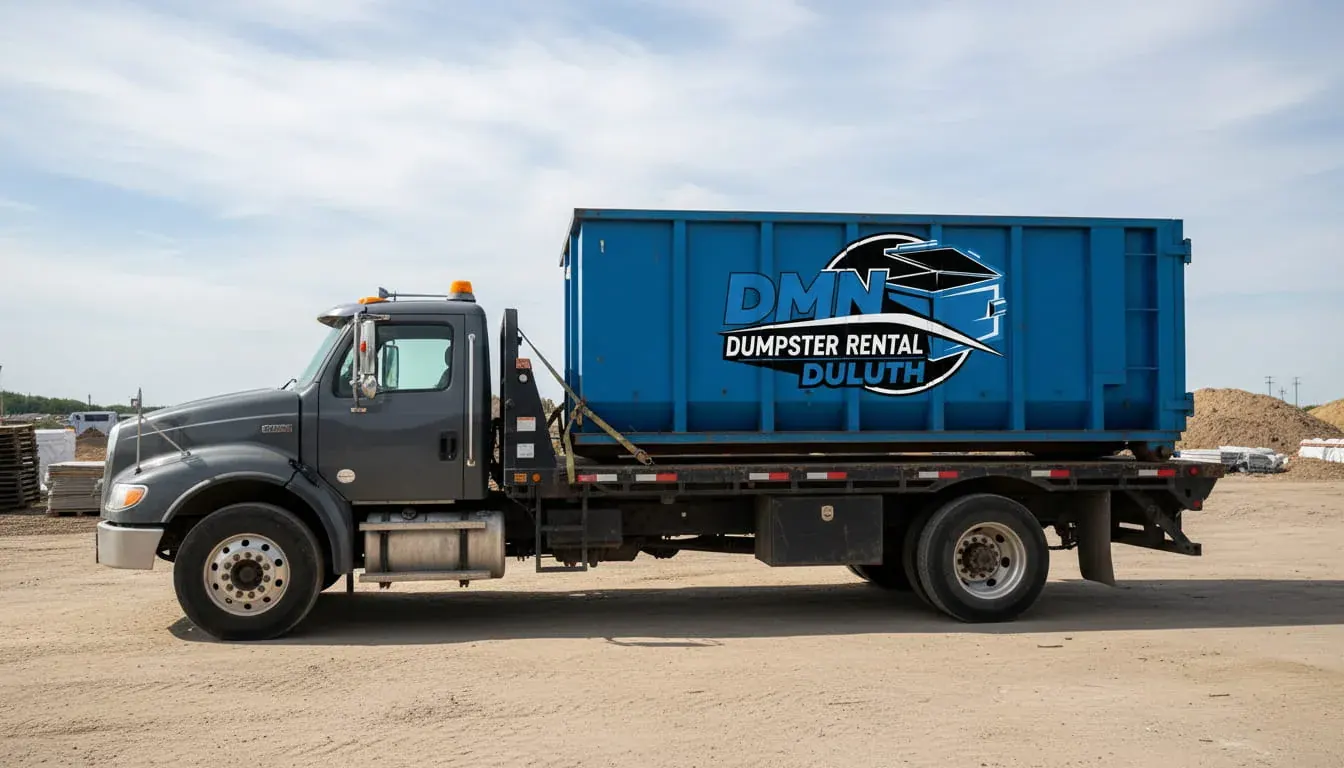
A West Duluth operator's guide to getting a roll-off dumpster safely onto hillside driveways, alleys, and street placements from Congdon to Denfeld.
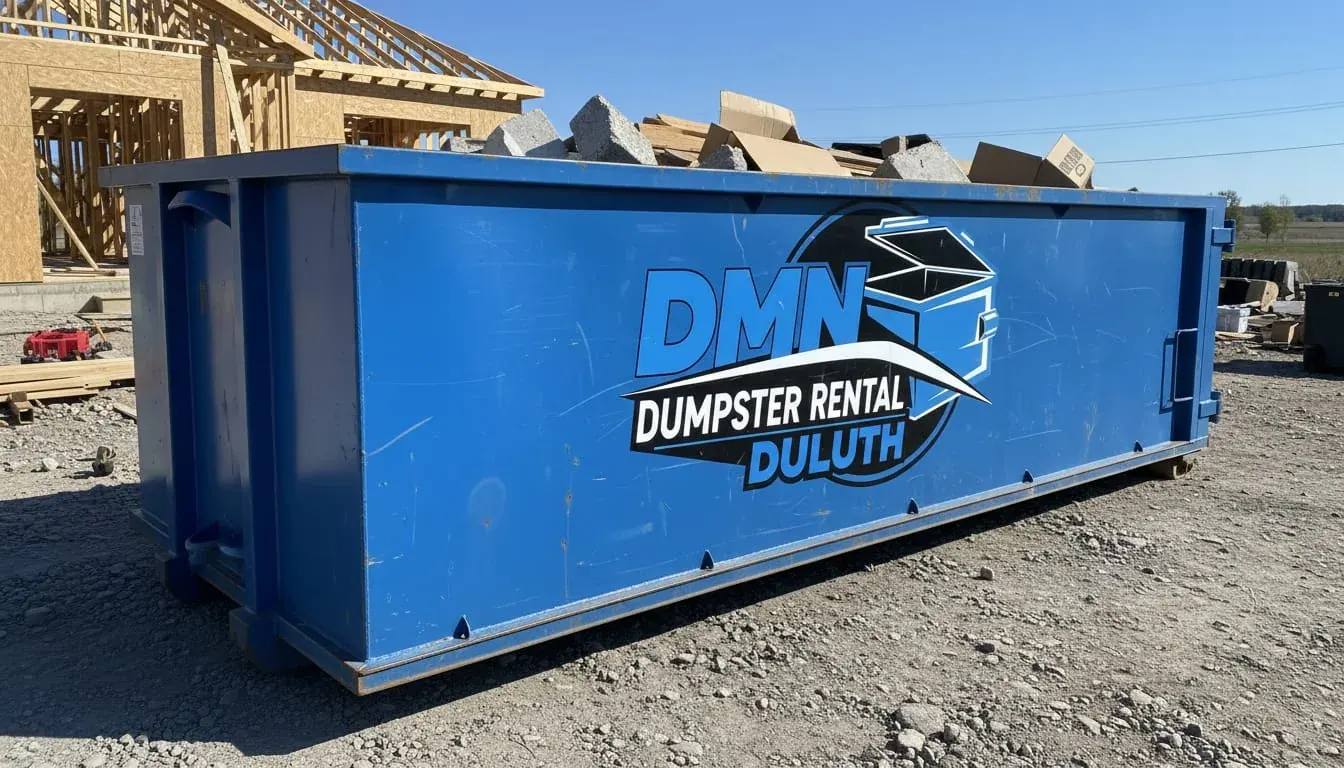
How WLSSD manages Duluth's waste, what Minnesota and Wisconsin landfill bans mean for your dumpster, and where common items actually end up.
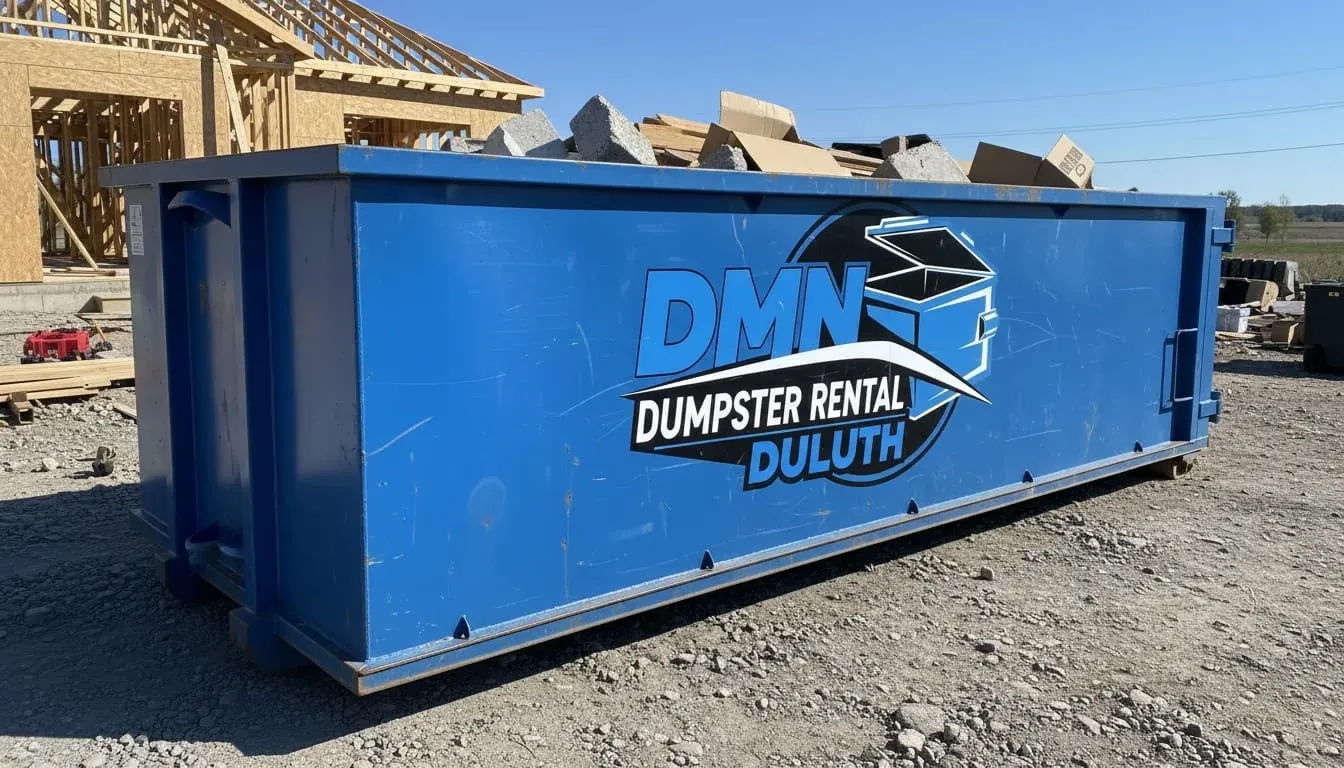
Duluth dumpster sizing depends on weight, not just volume — especially in pre-1940 homes with plaster and lath. Here's how to pick the right size.