
What a Dumpster Rental Actually Costs in Duluth (and What Drives the Price)
Size, rental period, tonnage, debris type, and access all move dumpster rental cost in Duluth. Here's what drives price and how to control it.
Duluth dumpster guide
Duluth dumpster sizing depends on weight, not just volume — especially in pre-1940 homes with plaster and lath. Here's how to pick the right size.
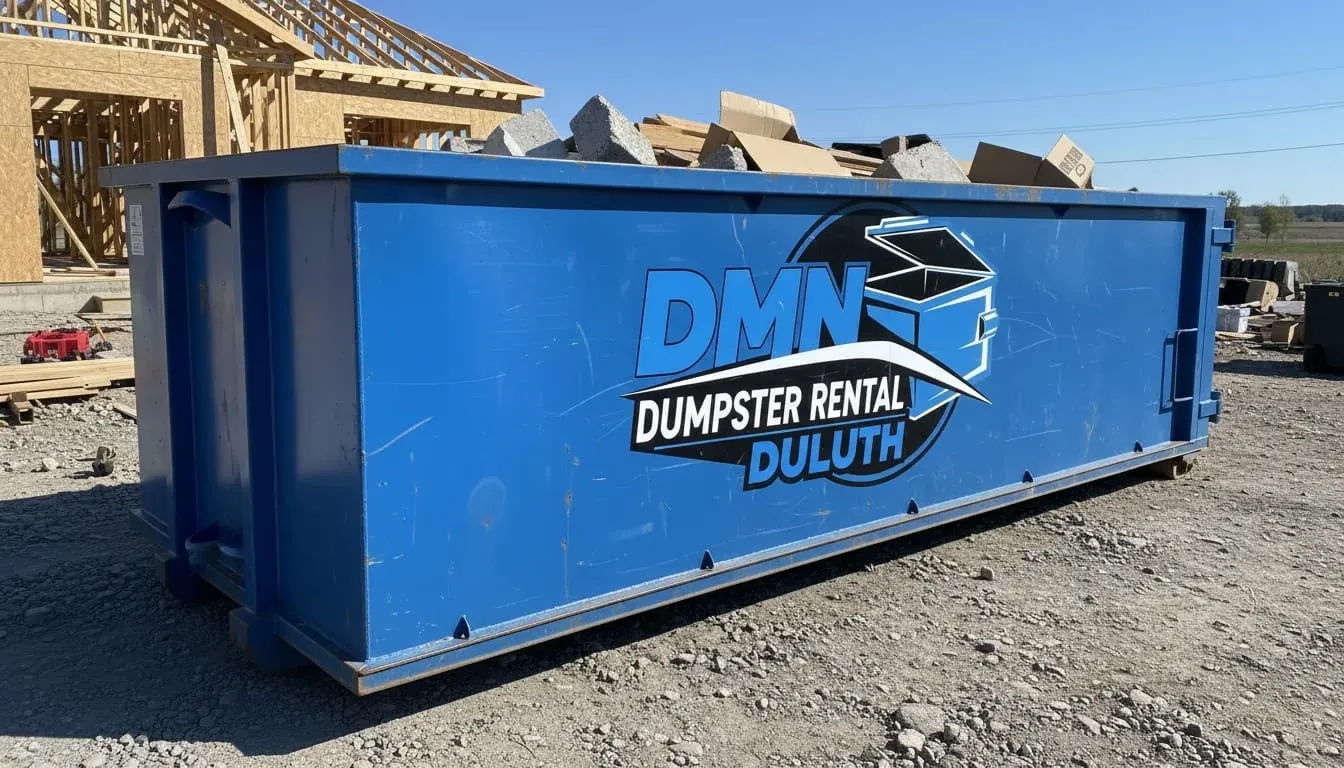
Every call to our West Duluth yard starts the same way: "I need a dumpster, probably a 20." Half the time that's right. The other half, the caller is guessing off gut feel — a size someone mentioned on a Facebook group, or whatever showed up first on a search result — and they end up either paying for empty air or getting hit with an overage fee because the box that looked plenty big by volume was full by weight before they were half done. After thirteen years of dropping boxes on hillside driveways from Lakeside to Piedmont Heights, here is how we actually size a rental, and why the honest answer is usually smaller than you think.
A dumpster's yardage tells you how much space is inside the box. It does not tell you how much weight your hauler will let you leave the yard with. Every roll-off has a tonnage allowance built into the flat rate, and once you cross it, you pay by the ton for the overage — no exceptions, because the truck pulling it has a legal axle-weight limit on Minnesota roads. A 20-yard box holds a lot of cubic feet, but if you fill it with wet plaster, roofing shingles, or concrete, you'll hit the weight ceiling with the container still looking half-empty.
This is the single biggest miscalculation homeowners make, and it is worse here than in a lot of markets because of what our housing stock is actually built out of.
Duluth has an enormous share of housing built before 1940 — the hillside neighborhoods, Congdon, Chester Park, most of Lakeside — and that generation of home was framed with wood lath and finished in gypsum or lime plaster, often with knob-and-tube wiring still tangled through the walls. Plaster and lath is dense. A single wall's worth, once it's off the studs, weighs multiples of what the same square footage of drywall weighs. Gut a 1920s bungalow's interior walls and ceilings down to the studs and you can load a 15-yard box to the rail and still be nowhere near full by volume, yet already over the ton allowance.
We size these jobs by weight first, volume second. If you're stripping plaster in a pre-1940 Duluth home, tell us the square footage of wall and ceiling coming down, not just "how big is the room." That's the number that decides whether you need a 15 with a bumped tonnage allowance or whether we split it into two smaller pulls so the truck isn't fighting a steep, ice-slicked driveway with a dangerously overloaded box. The Minnesota Pollution Control Agency's building material guidance covers why dense demolition debris like plaster and lath is handled differently from lighter construction waste, which lines up with how we price and size these pulls.
| Size | Dimensions | Load Capacity | Best For |
|---|---|---|---|
| 10 Yard | 12 x 8 x 3.5 ft | ~3 pickup loads, 1-2 ton | Heavy debris, small gut jobs, single-car garage cleanout |
| 15 Yard | 16 x 8 x 4 ft | ~4-5 pickup loads, 2-3 ton | Kitchen remodel, basement cleanout, small roof tear-off |
| 20 Yard | 22 x 8 x 4.5 ft | ~6 pickup loads, 3-4 ton | Whole-house cleanout, 20-30 square roof |
| 30 Yard | 22 x 8 x 6 ft | ~9 pickup loads, 4-5 ton | Major renovation, new build, estate cleanout |
| 40 Yard | 22 x 8 x 8 ft | ~12 pickup loads, 5-6 ton | Commercial, high-volume light debris only |
A few concrete examples from jobs we've run around town:
Renters almost always round up "to be safe." We understand the instinct, but on flat-rate weight-included pricing it usually costs you twice: you pay for capacity you never use, and on a lot of Duluth's older lots, a bigger box is genuinely harder to place. If your project is dense material — plaster, tile, concrete, shingles, wet debris — the tonnage limit hits before the box fills, so a smaller container with the right weight allowance does the job for less. We'll ask what's actually coming out of the house before we quote a size, and more often than not we talk people down a size, not up.
Volume and weight aside, Duluth throws a third variable into sizing that flatland markets don't deal with: access. A steep driveway off Skyline Parkway, a narrow avenue in Piedmont, or a switchback drop in the older hillside plats can make a 30-yard container physically impossible to place safely, regardless of how much debris you're generating. In those cases we're sizing for what a rollback truck can deliver and retrieve without putting the box, the driveway, or the crew at risk — sometimes that means two pulls of a 15-yard instead of one 30-yard. We cover the specifics, including which streets give us the most trouble in winter, in our steep driveway placement guide. If your address is on a hill, mention it when you call — it changes the recommendation before we even talk about the project.
How you load the box matters almost as much as which size you pick.
Undersize it and you're paying for a second pull — a same-day swap if you call before noon, but still a second trip charge and a delay on your project timeline. Oversize it and you've paid for capacity that sat empty, or worse, tried to shoehorn a 30-yard onto a hillside driveway that can't actually take it. Either mistake is avoidable with a five-minute conversation up front. Call (218) 514-6269 and walk us through the project — square footage, material type, and where the container needs to sit — and we'll size it right the first time.
If you're renting between November and April, factor in snow load. Heavy, wet Duluth snow sitting in an open container for a few days adds real tonnage, and roof work driven by ice dams often means wet shingles and soaked underlayment. Our winter rental guide covers how we adjust sizing and placement once the snow starts flying.
| Project Type | Typical Size | Watch For |
|---|---|---|
| Garage or single-room cleanout | 10 yard | Density of items, not just count |
| Kitchen or bath remodel | 15 yard | Tile, tub, and cabinet weight |
| Whole-house cleanout, small roof | 20 yard | Shingle weight, layers |
| Major renovation, estate, new construction | 30 yard | Hillside access before you commit |
| Commercial, high-volume light debris | 40 yard | Not for concrete, dirt, or shingles |
Not sure which category your job falls into? Browse our roll-off dumpster rental page for the full lineup, or if it's a smaller haul-away job rather than a rental sitting on-site, look at junk removal instead. For construction sites specifically, our construction dumpster rental page breaks down permitting and placement for active job sites, and our construction debris disposal guide covers what materials need to be separated before pickup. For a full rundown of what the regional facility accepts and how loads get sorted, see the WLSSD disposal guide.
We deliver flat-rate roll-offs throughout Duluth and the Twin Ports, plus St. Louis, Carlton, and Lake counties and into Douglas County, Wisconsin — from Superior and Hermantown to Two Harbors, Cloquet, and Proctor. Same-day delivery is available on orders placed before noon. Call (218) 514-6269 and we'll size the right box for your address and your project, not just a number off a chart.
FAQs
Not usually. Because our rate includes a set tonnage allowance, sizing up mainly buys you extra volume, not extra weight capacity — and on dense material like plaster, tile, or shingles, volume was never the limiting factor. If you're between sizes, call (218) 514-6269 and describe the materials; we'll size for weight first and volume second, and we can always swap to a bigger box same-day if you underestimate.
Homes built before 1940 in neighborhoods like Congdon, Chester Park, and Lakeside were finished with plaster and wood lath instead of drywall, and that material is dramatically heavier per square foot. A room's worth of plaster demo can max out a dumpster's tonnage allowance while the box still looks half-empty by volume, so we size these jobs smaller and factor in the weight up front.
Not always. Many hillside lots off Skyline Parkway and in the older Piedmont and Chester Park plats don't have the clearance or grade for a rollback truck to safely place a 30-yard box. In those cases we recommend a smaller container, sometimes with two pulls instead of one, or we scout placement on the street. See our steep driveway placement guide or call ahead so we can check your address before delivery.
We legally cannot haul a container that's loaded above the top rail, since it exceeds what's safe and permitted on Minnesota roads. If our driver arrives to an overfilled box, material has to come back below the rail line before pickup, which delays your project. Loading heavy items flat on the bottom and filling gaps with smaller debris keeps you under that line without wasting space.
Sometimes, because wet, heavy Duluth snow accumulating in an open container over several days adds real weight, and ice-dam-related roof repairs often mean waterlogged shingles and underlayment that weigh more than dry material. We factor seasonal weight into winter sizing recommendations — ask us about it when you call.
Ready when you are
Call and you will speak to someone local who knows the streets, the permit rules and which box actually fits your driveway. Flat rate quoted up front.
Keep reading

Size, rental period, tonnage, debris type, and access all move dumpster rental cost in Duluth. Here's what drives price and how to control it.
Duluth and Superior sit on opposite sides of a state line with different disposal-ban lists. Here's what each state prohibits and where it actually goes.
A plain-language look at when Duluth requires a dumpster permit, when it doesn't, and how the rules change in nearby cities and across the Wisconsin line.