
What You Can and Cannot Put in a Dumpster in Minnesota (and Wisconsin)
Duluth and Superior sit on opposite sides of a state line with different disposal-ban lists. Here's what each state prohibits and where it actually goes.
Duluth dumpster guide
Size, rental period, tonnage, debris type, and access all move dumpster rental cost in Duluth. Here's what drives price and how to control it.

Every dumpster quote sounds simple until the invoice shows up with extra lines on it. Usually that's not because the hauler is dishonest — it's because the first quote was a teaser rate that never included what actually determines cost. An honest answer to "what will this cost" starts with what moves the number.
We've rented roll-off dumpsters out of West Duluth since 2013, and the questions haven't changed: how big a box, how long, and what if it's heavier than expected. Below: five factors that set the price anywhere in the Twin Ports, why tonnage trips people up most, and eight ways to spend less. Call (218) 514-6269 and ask us to walk through your job before you book.
Every roll-off quote — ours or anyone else's — is built from the same five inputs.
A 10-yard box costs less to deliver and haul than a 30-yard box, largely because of what it can legally carry. Not sure which fits your project? Our size guide walks through it yard by yard.
A flat-rate rental period usually runs 7 to 14 days depending on the hauler. That window has to cover your actual work, not the optimistic version of it. Weather delays and no-show contractors are the usual reasons a rental runs long — and running long is when extension charges show up.
This is the one that surprises people, so it gets its own section below. Short version: every rental includes a tonnage allowance, and going over it costs money because the disposal facility charges the hauler by the pound.
Clean cardboard weighs almost nothing. Shingles, concrete, dirt, and wet drywall weigh a tremendous amount in a small footprint. The same size box loaded with roofing debris versus household junk can differ by a factor of three or four in actual tonnage, which is why "what are you putting in it" is one of the first questions an honest hauler asks.
Where the box sits and how the truck gets to it matters. A flat driveway in Hermantown is a different job than a steep hillside lot above downtown Duluth or a tight alley delivery. Poor access can mean a smaller box, planks to protect pavement, or an extra trip if the truck can't get a clean pull.
Here's the mechanic most customers never see: a loaded roll-off truck crosses a scale at the landfill or transfer station. Empty weight is subtracted, and the facility bills the hauler for exactly what's left, by the ton — the ground truth, not a guess based on how full the box looks. Weight-based billing at the scale is standard practice at Minnesota's permitted disposal facilities (see the Minnesota Pollution Control Agency's overview of C&D debris landfills).
A flat-rate quote bakes a tonnage allowance into the price. The mismatch happens when someone rents a 20-yard box expecting "household junk" weight and fills it with wet basement debris, packed dirt, or a shingle tear-off instead. Visually it might look half full; on the scale, it can already be over the allowance.
One material — just concrete, just shingles, just yard debris — is often cheaper than a mixed load of equal weight, because separated material can go to a facility built for that material. Mix everything and the whole load gets handled as mixed debris, usually the more expensive path per ton.
Overage applies once a load exceeds its tonnage allowance, billed per additional ton at the hauler's posted rate — a pass-through, not a penalty. To avoid it:
Three tons of concrete costs less in a box rated for heavy material than the same three tons in a large box meant for bulky, lightweight junk. A large box's tonnage allowance is calibrated for furniture and boxes, not dense material, so concrete blows through it fast and adds overage on a bigger base rate. Matching the container to the material, not just the volume, is one of the most reliable ways to control cost — worth asking about at (218) 514-6269.
Extension days. Run past the included rental period and most haulers charge a daily rate to keep the box on-site. Usually modest per day, but it adds up on a stalled project — if your timeline is soft, say so up front.
Trip charges. These happen when the truck can't do its job: a car blocking the container, a locked gate, unplowed snow, or an overfilled box. Overfilled containers aren't legal to haul, so the driver often leaves without it, and a second trip gets billed once it's brought to a safe level. Keep debris level with, not mounded over, the top of the box to avoid this.
If the dumpster sits on your own driveway or yard, no permit is required. If it has to go in the street, alley, or boulevard, the City of Duluth requires an Obstruction Permit through its Engineering Division before placement. City code prohibits placing equipment in "any of the streets, public sidewalks, avenues, alleys, highways or public grounds" without one. Apply through the city's ePlace system; Engineering (218-730-5200) can confirm specifics for your address — see the City of Duluth Engineering permits page. We can flag in advance whether your placement is likely to need one — see our Duluth permit guide or steep driveway placement guide.
Road conditions in northeastern Minnesota genuinely change what a delivery truck can do — this isn't a sales pitch, it's physics. Every winter, MnDOT and St. Louis County allow higher truck weights on frozen roads; every spring, as frost leaves the ground, they impose spring load restrictions that cut axle weights, typically March into April or May depending on the zone. St. Louis County commonly restricts paved roads to around 10 tons per axle and gravel roads to about 5 tons per axle, because "the roadbed becomes saturated with water making the road structure unable to support normal truck weights." A loaded roll-off truck can exceed those thresholds. See MnDOT's seasonal load limits program for the current zone map and dates; St. Louis County enforces the same restrictions on its own roads. Practically this can mean routing or timing changes on affected roads. Snow and unplowed access add their own complications — our winter dumpster rental guide covers what to expect.
We serve both sides of the harbor, but Duluth and Superior aren't identical logistically. Different jurisdictions mean different right-of-way rules, permit offices, and sometimes different routing, and Minnesota and Wisconsin regulate some waste streams differently. A Superior quote isn't automatically identical to a Duluth one a mile away — ask if your job is near the state line.
A flat-rate quote tells you, before delivery, what's included: container size, rental days, tonnage allowance, and delivery and pickup as part of the price rather than add-ons. That's the model we run — one number, set up front, with overage and extension rates disclosed rather than buried. The alternative — a low headline price with fuel and disposal fees added afterward — often costs more than a transparent flat rate for the same job. The teaser rate isn't illegal; it's just incomplete.
| Driver | What It Affects | How to Control It |
|---|---|---|
| Size | Base rental price, included tonnage | Match size to project, not to "just in case" |
| Rental period | Whether extension days apply | Be realistic about your timeline before booking |
| Weight/tonnage | Overage charges above the included allowance | Tell the hauler what's going in; choose the right box for dense material |
| Debris type | Disposal path and how fast weight adds up | Keep loads clean and separated where possible |
| Location/access | Trip charges, box size limits, protection needed | Clear a path and confirm placement before delivery day |
| Right-of-way placement | Whether a City obstruction permit is required | Place on private property when possible; apply ahead of time if not |
| Season | Routing and hauling limits during spring thaw | Book early and ask about seasonal timing in March–May |
If a hauler can't answer these clearly before you book, that's worth noting. We answer all of them on the first call — reach us at (218) 514-6269 or through our contact page. For job sites, see our construction dumpster rental and commercial dumpster rental pages, or our WLSSD recycling guide for ways to cut what you pay to dispose of in the first place.
FAQs
Usually because the online number was a base rate that didn't include delivery, a specific tonnage allowance, or the debris you actually put in the box. Flat-rate pricing is built to avoid that by including delivery, the rental period, a tonnage allowance, and pickup in one number up front. Ask any hauler exactly what's included before you book, and ask what the overage rate is if you exceed the tonnage allowance.
The loaded truck crosses a scale at the disposal facility, and the empty weight is subtracted from the loaded weight to get the actual tonnage. That scale ticket determines whether your load was within the included allowance or over it — it's not based on how full the box looks.
No. A permit is only required when the container has to sit in the public right-of-way — the street, alley, or boulevard. The City of Duluth calls this an Obstruction Permit, issued through its Engineering Division. Placing the box entirely on your own property avoids the permit process.
They can. MnDOT and St. Louis County impose reduced truck weight limits on certain roads roughly from March into April or May while the ground thaws, since a saturated roadbed can't support normal loaded-truck weight. This mainly affects routing and timing on affected roads rather than availability, but it's a real seasonal factor in northeastern Minnesota, not a marketing excuse.
Tell your hauler exactly what's going in the box before delivery, especially if it's dense material like concrete, dirt, or shingles, and ask what tonnage allowance comes with the size you're renting. Matching the container to the material, keeping the load level rather than mounded, and separating heavy debris from general junk are the most reliable ways to stay within the included allowance.
Ready when you are
Call and you will speak to someone local who knows the streets, the permit rules and which box actually fits your driveway. Flat rate quoted up front.
Keep reading
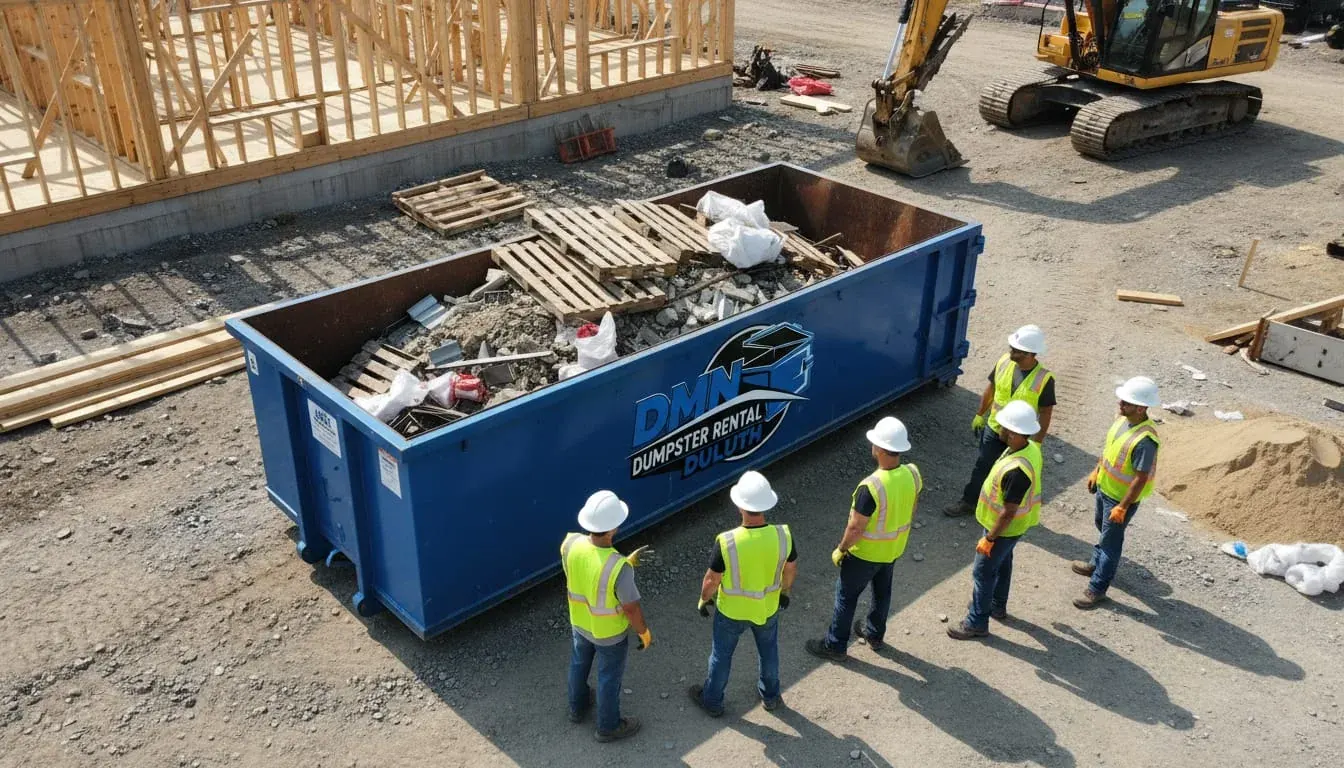
Duluth and Superior sit on opposite sides of a state line with different disposal-ban lists. Here's what each state prohibits and where it actually goes.
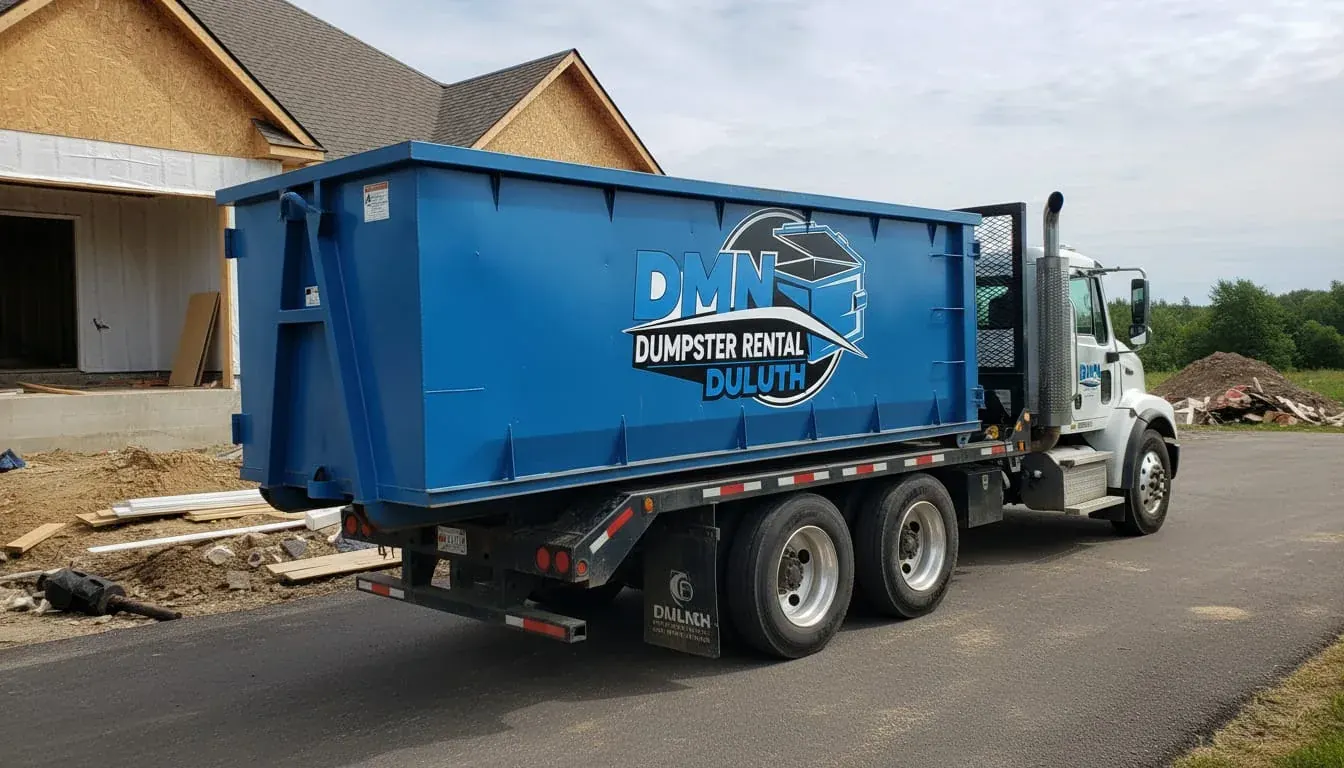
A plain-language look at when Duluth requires a dumpster permit, when it doesn't, and how the rules change in nearby cities and across the Wisconsin line.
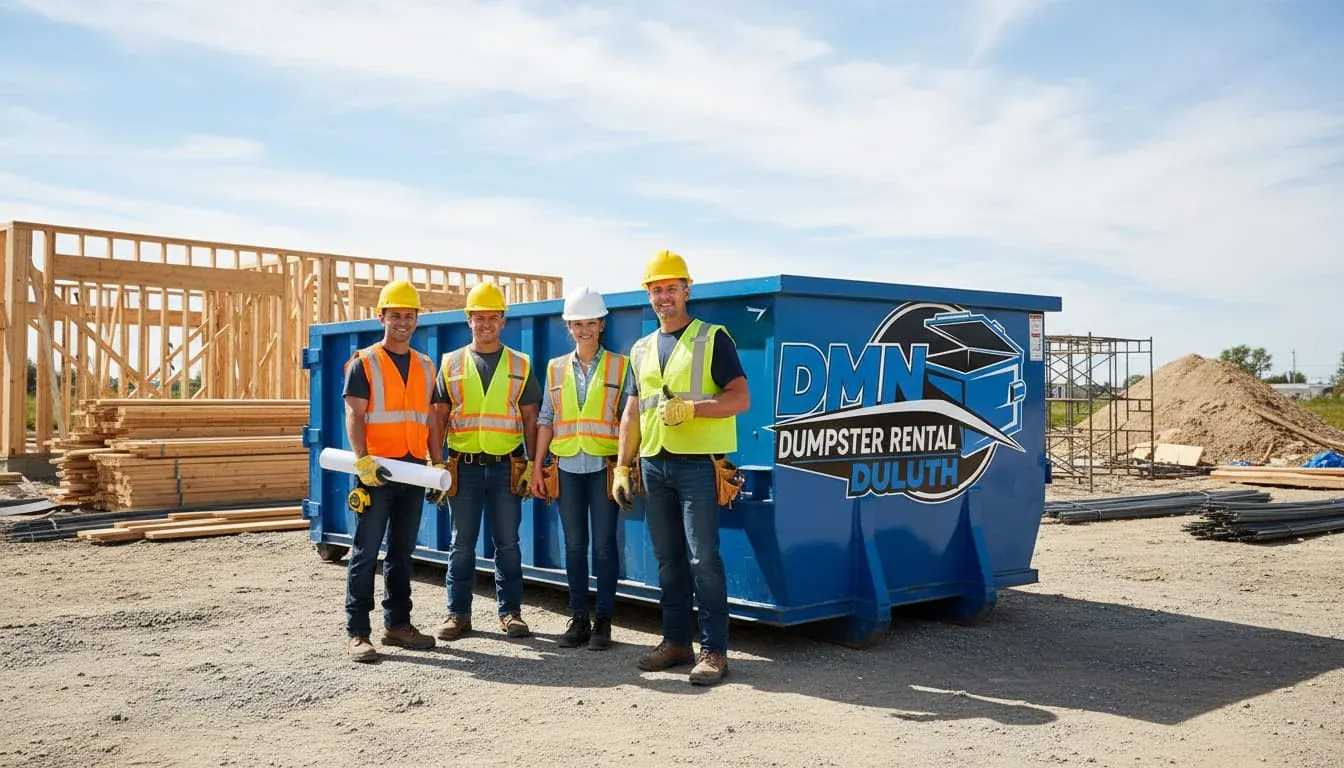
How Duluth contractors handle C&D debris classification, plaster and lath weight traps, load legality, and spring load restrictions correctly.