
Renting a Dumpster in a Duluth Winter: What Actually Changes
An operator's guide to frozen ground, spring load restrictions, snow weight, hillside placement, and ice dam season for Duluth dumpster rentals.
Duluth dumpster guide
Squares, shingle weight per layer, ice dams, snow load, hillside placement, winter tear-offs, and permits — how we size a Duluth re-roof dumpster.
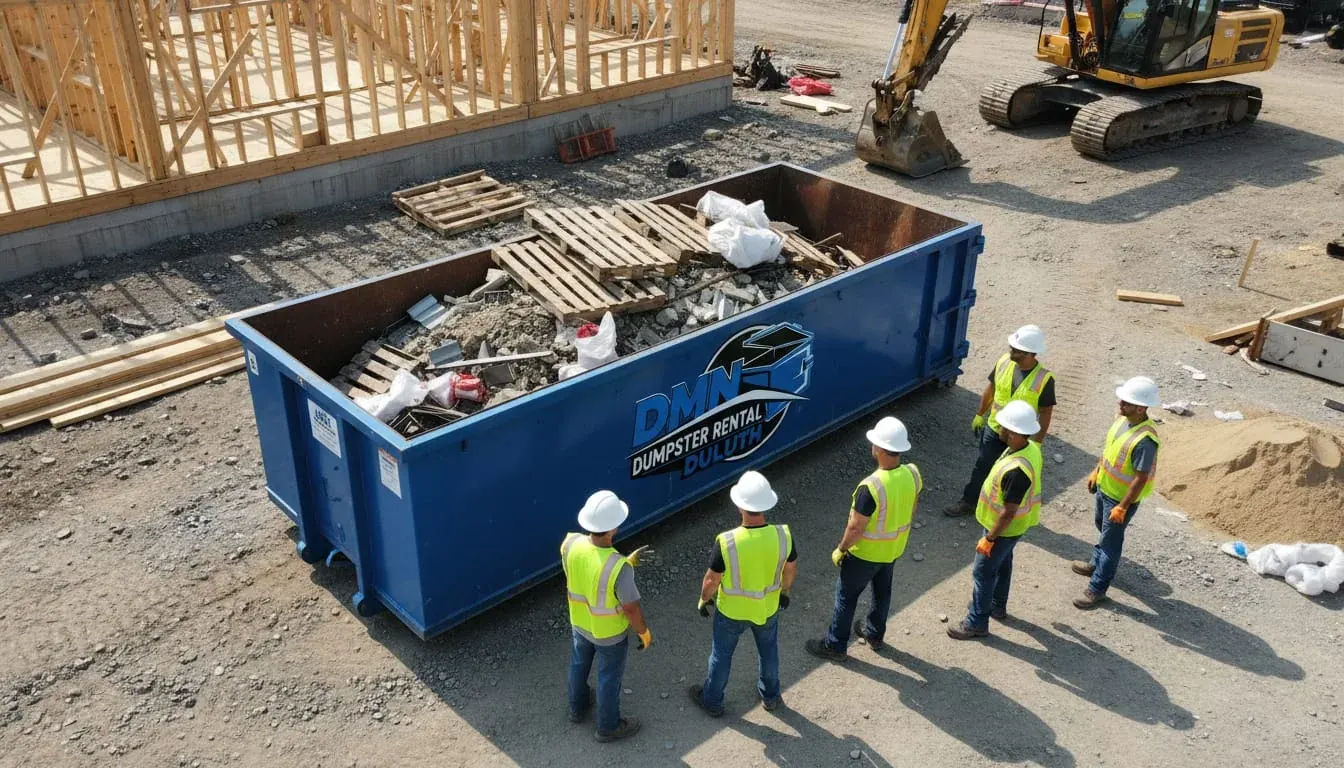
A re-roof dumpster gets sized wrong more than any other job we book, and it's not because roofers are bad at math. Roofing is a weight job dressed up as a volume job. A container can look a third full and still be at its legal tonnage cap, and the crew that sized off "how big is the roof" instead of "how many layers are coming off" is the one paying an overage fee. Here's how we size these, with the numbers we use at the yard on Roosevelt Street.
Roofers price and measure in squares — one square equals 100 square feet of roof surface, not floor space. Get a rough count from the ground by taking the home's footprint (length times width), adding every wing, dormer, garage, and porch roof separately, and totaling them for the flat, "as if laid on the ground" area.
Pitch adds surface area you can't see from the driveway. A low-slope roof (3/12-4/12) adds roughly 5-10% over the flat footprint; a standard 6/12-8/12, common on most Duluth gables, adds 12-20%; steeper 10/12-and-up roofs, seen on some older Chester Park and Congdon homes, can add 25% or more. An 1,800-square-foot footprint at 6/12 pitch works out to roughly 20-21 squares once waste and overlap are built in. When in doubt, round up — a shortfall on delivery day costs more than a slightly larger container.
This drives sizing more than anything else:
A second layer doesn't just double the weight, it more than doubles the moisture load — old shingles have absorbed years of rain and snow, so a 20-year-old tear-off often weighs more per square than fresh bundles going back up. We see plenty of Duluth houses, especially ones bought recently and left untouched, carrying two or three layers because a prior seller re-roofed over the old layer instead of tearing it off. Minnesota's residential code caps a roof at two layers before a full tear-off is required, so a third layer comes off no matter what.
| Roof size | 1 layer (tear-off) | 2 layers | 3 layers |
|---|---|---|---|
| Up to 15 squares (garage, small ranch, cabin) | 15-yard | 20-yard | 20-yard, budget for a mid-job weight check |
| 16-25 squares (average single-story home) | 20-yard | 20-yard, likely weight-limited before it's full | 30-yard, plan on a swap |
| 26-35 squares (larger two-story home) | 20 to 30-yard | 30-yard | 30-yard plus a second pull |
| 36+ squares (large home, multi-unit, commercial) | 30-yard | 30-yard, two containers likely | 40-yard, or two 30s run in sequence |
Treat this as a starting point — steep pitch, cedar shake, and heavy architectural shingles push jobs a size category higher. Most tear-offs land on a 20-yard or 30-yard container; give us the square and layer count when you call and we'll size off real weight, not the box on the truck.
Every roll-off carries a tonnage allowance built into the price, and shingles hit that cap before the box looks full. A single layer of architectural shingles off a 25-square roof already weighs roughly two and a half tons, before underlayment and nails. A second layer on top can max out a 20-yard's legal weight while the container is still visibly two-thirds empty. That's not a defect in the container — it's asphalt being asphalt. Overage fees exist because hauling and disposing of tonnage costs money regardless of the space it occupies, so size for weight up front and confirm the tonnage allowance before the first bundle goes over the rail.
Call (218) 514-6269 before tear-off day and tell us the square footage and layer count — we'd rather talk you into the next size up on the phone than swap a container mid-afternoon.
Asphalt is the default and it's straightforward waste — it goes in the roofing dumpster and gets weighed at disposal. Cedar shake is still up on some older Duluth homes, in neighborhoods built before asphalt became standard; it's lighter per square than asphalt but bulkier and splinters into odd shapes, so plan for more volume, less weight, per square. Metal roofing is different in kind, not degree — standing-seam and metal shingle systems have gotten common here because they shed heavy snow instead of holding it. Old metal panels are scrap, not trash: steel and aluminum have real recycling value, and tossing them in with mixed asphalt debris means paying disposal rates on material a scrap yard would pay you for. Keep panels on a separate tarp and ask us about a scrap pull.
Wind and hail get the headlines, but roofs here fail early almost always because of ice dams. Warm air leaking into the attic melts the underside of the snowpack on the upper roof; meltwater runs to the cold eave, refreezes, and builds a ridge of ice that backs water up under the shingles, finding every nail hole and worn seam and dripping into the attic and ceiling — often not showing up as a stain until well after the thaw. It's the single biggest cause of emergency, off-season re-roof calls we get in the Twin Ports, and why a January or February tear-off happens here more than in most of the country. If ice dam damage is why you're re-roofing, price the membrane upgrade — ice-and-water shield running at least two feet past the interior wall line — at the same time; it's cheap compared to doing the tear-off twice.
St. Louis County sits in a higher ground-snow-load zone than most of the state, and Lake Superior's lake-effect bands can dump well above the seasonal average on the North Shore side in a single event. Minnesota's residential code sets structural design snow loads by jurisdiction, specifically because a roof built to a downstate spec would be undersized here. Duluth roofs typically run heavier truss spans, steeper pitches, and roofing systems — ice-and-water shield, ventilation baffles, sometimes heat cable — a contractor in a milder climate might skip. Confirm your spec accounts for local load, not a generic template.
Shingles come off fast once a crew starts, and the container needs to sit close enough to the eave that tear-off goes straight from roof to box, not roof to wheelbarrow to box. We set containers on the side matching the section coming off first, board the driveway or lawn under the wheels, and lay a tarp where debris might overshoot on a steep-pitch throw. Duluth complicates this more than flat cities do — a large share of our jobs sit on hillside lots between the harbor and the ridge, with narrow, steep driveways and retaining walls that make a simple "back it up to the garage" delivery the exception rather than the rule. If your driveway has real grade, tell us before delivery — our steep-driveway placement guide covers how we handle it.
Cold-weather roofing is routine for us — ice dam damage doesn't wait for June — but frozen shingles tear differently. Below about 40°F, asphalt loses flexibility; instead of peeling cleanly off the felt it cracks and shatters, generating more loose granule debris to sweep rather than lift. Frozen snow on the roof also adds weight to the container faster than expected, since it comes off with the shingles instead of melting first. Size up one notch from the table above for a winter tear-off — see our winter dumpster rental guide for placement on snow and ice.
The tear-off is only half the debris. Roofing nails scatter across the yard, driveway, and gutters no matter how careful the crew is, and a magnetic roller sweep of the whole work area — not just under the eave — is standard before a job is called done. Old felt or underlayment, flashing, drip edge, pipe boots, and any rotten decking that gets replaced go in the same container as the shingles; keep metal scrap separate. If you're unsure what else can ride along in the same load, our what-can-go-in-a-dumpster guide spells it out. If tear-off exposes water-damaged sheathing, expect extra plywood debris — factor that in if you're already close to a container's cap.
Yes. The City of Duluth requires a permit for residential re-roofing, and it's built to be simple: re-roofing sits under a flat permit-fee structure with no plan review required, and either the owner-occupant or a Minnesota-licensed residential contractor can apply. Commercial re-roofing is handled separately with additional plan-review requirements. Construction Services and Inspections handles applications and confirms current fees — call 218-730-5240 before tear-off day if you haven't pulled one before. Details are on the City of Duluth's permit types page, and our Duluth permit guide covers how this interacts with placement if the container sits in the right-of-way.
Have ready:
We haul roofing tear-offs across Duluth, the Twin Ports, St. Louis, Carlton, and Lake counties, and Douglas County, Wisconsin — sized by weight, because that's how the disposal facility bills us. Our roofing dumpster rental page covers container specs, and our sizing guide and cost guide help if you're pricing more than one job type. Shingle debris separated for recycling can skip the landfill — the Minnesota Pollution Control Agency's building-material reuse and recycling program and the WLSSD disposal guide cover what's accepted locally for a large tear-off. Call (218) 514-6269, or see our contact page for the yard address and hours, and describe the roof — we'll tell you the size, the price, and when we can have it in your driveway.
FAQs
A 20-yard container typically handles a single-layer tear-off of roughly 16-25 squares of asphalt shingles before it hits its tonnage limit, though architectural shingles or a second layer will cap it out sooner even if the box still looks half-empty. Tell us the square count and layer count and we'll confirm the size before delivery.
Shingles are dense — a single layer of architectural shingles off a mid-size roof can weigh two and a half tons before nails and underlayment are added, and old shingles hold extra weight from years of absorbed rain and snowmelt. A container can legally max out on tonnage while it's still two-thirds empty by volume. That's normal for roofing loads, not a sign of a bad container.
Yes. The City of Duluth requires a permit for residential re-roofing, filed by either the owner-occupant or a Minnesota-licensed residential contractor, and it falls under a flat permit-fee structure with no plan review required for most homes. Call Construction Services and Inspections at 218-730-5240 or check the city's permit types page for current requirements on your specific job.
You can, but it's not the best move. Old metal roofing panels have scrap value that a metal recycler will pay for, while mixed asphalt debris gets billed at standard disposal rates. Keep metal panels on a separate tarp or pile and ask us about a scrap pull instead of dropping them in with the shingles.
Yes. Below about 40°F, asphalt shingles get brittle and shatter instead of peeling cleanly, which slows the crew and adds loose fragment debris. Frozen snow or ice still on the roof also adds weight fast. We do winter tear-offs regularly since ice dam damage often forces the issue, but we recommend sizing up one container level from a dry-season estimate.
Ready when you are
Call and you will speak to someone local who knows the streets, the permit rules and which box actually fits your driveway. Flat rate quoted up front.
Keep reading
An operator's guide to frozen ground, spring load restrictions, snow weight, hillside placement, and ice dam season for Duluth dumpster rentals.
A West Duluth operator's guide to getting a roll-off dumpster safely onto hillside driveways, alleys, and street placements from Congdon to Denfeld.
How WLSSD manages Duluth's waste, what Minnesota and Wisconsin landfill bans mean for your dumpster, and where common items actually end up.